

Mutual cost tracking is defined as the continuous process of monitoring and recording all shared expenses against an agreed baseline budget to maintain transparency and prevent financial disputes. The industry term for this practice is shared expense management, and mutual cost tracking is its everyday equivalent for friends, roommates, and small groups. The four core phases of any solid tracking system are resource planning, cost estimation, baseline budgeting, and active cost control. Each phase builds on the last, giving everyone in the group a clear picture of where money is going before problems surface. Whether you are splitting rent, dividing trip costs, or sharing project materials, this process is the difference between a smooth arrangement and a money argument.
What is mutual cost tracking and how does it work?
Mutual cost tracking is the systematic, ongoing process of recording every shared expense and comparing it to what the group originally agreed to spend. Think of it as a shared scoreboard. Everyone can see the current score, not just the final result at the end of the game.
The process starts with resource planning. The group lists every expected cost: rent, groceries, utilities, travel, or materials. From that list, you build a cost estimate, which becomes your baseline budget. That baseline is the number everyone agrees on before any money changes hands.
Active cost control is where most groups fall short. Recording expenses at the moment they happen, not days later, is what keeps the ledger accurate. Continuous tracking provides real-time visibility, which is the critical requirement for keeping shared finances on track. Without it, you are doing post-mortem accounting, which means you only find problems after the damage is done.

Variance analysis is the final piece. A variance is simply the gap between what you planned to spend and what you actually spent. Spotting a variance early gives the group time to adjust. Spotting it at the end of a trip or project leaves no room to fix anything.
| Phase | Key activity | Why it matters |
|---|---|---|
| Resource planning | List all expected shared costs | Sets the scope of what gets tracked |
| Cost estimation | Assign dollar amounts to each item | Creates a realistic spending target |
| Baseline budgeting | Get group agreement on the total | Gives everyone a shared reference point |
| Active cost control | Log expenses as they happen | Catches variances before they grow |
How does mutual cost tracking benefit small groups?
The clearest benefit of mutual expense tracking is early detection of budget overruns. When you catch a problem at 20% over budget, you can cut back. When you catch it at 80% over, you are already in trouble.
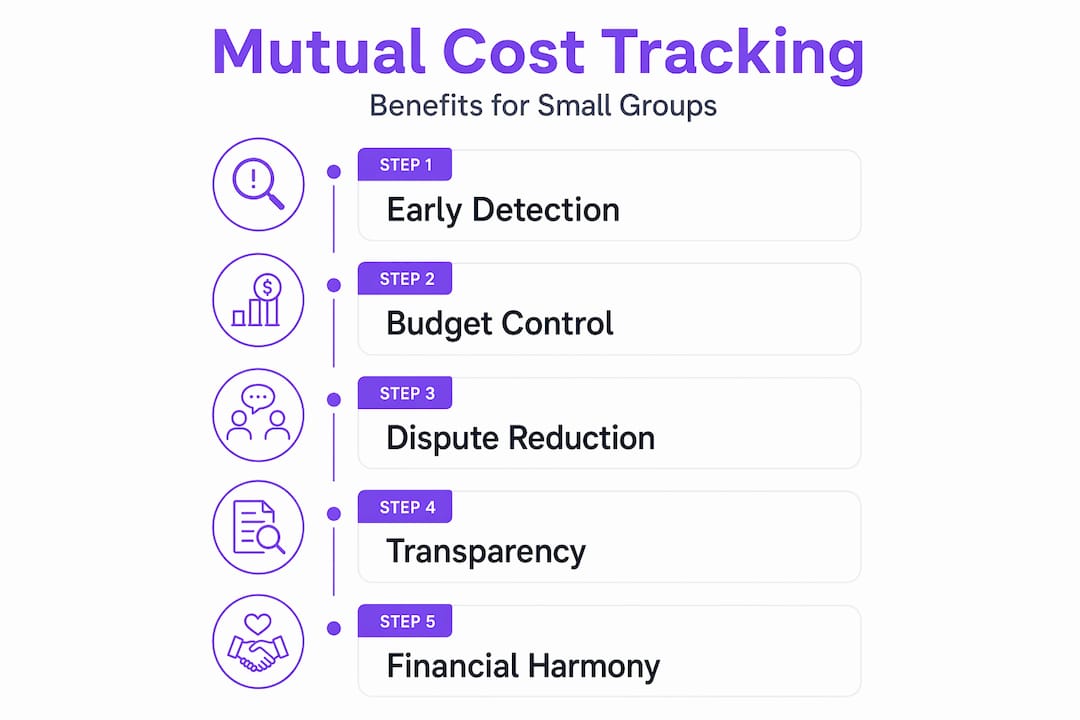
Real-time tracking also builds trust. When every person in the group can see the same numbers, accusations of unfairness lose their footing. Transparency is the fastest way to prevent the kind of money tension that damages friendships. Identifying variances early prevents budget overruns and maintains financial viability in shared projects. That applies just as much to a group vacation as it does to a construction project.
The benefits of mutual cost tracking for small groups include:
- Early warning signals: You see overspending before it becomes a crisis.
- Reduced disputes: A shared ledger removes “he said, she said” arguments about who paid what.
- Better decisions: Real numbers help the group decide whether to cut a planned expense or adjust contributions.
- Financial clarity: Everyone knows the current balance, not just the person who paid last.
- Fairness by design: Splitting costs by category makes it easy to verify that contributions are equitable.
Pro Tip: Schedule a quick five-minute review of shared expenses every week. Catching a $30 discrepancy early is far easier than untangling a $300 one at the end of the month.
Managing shared rent expenses is one of the most common places where groups skip tracking and pay for it later with arguments and resentment.
What are the most effective methods for tracking mutual costs?
The most effective method depends on the size of your group and the complexity of your shared expenses. For most individuals and small groups, two options cover the full range: a basic spreadsheet or a purpose-built digital tracking tool.
A basic spreadsheet works well when expenses are simple and infrequent. A spreadsheet that tracks date, category, transaction type, and amount is often sufficient for individuals and small groups. The catch is discipline. A spreadsheet only works if everyone logs entries consistently and in the same format.
Digital tracking tools remove most of that friction. They categorize expenses automatically, calculate balances in real time, and show each person exactly what they owe or are owed. For groups managing group trip expenses, a digital tool beats a shared spreadsheet on speed and accuracy every time.
| Method | Pros | Cons |
|---|---|---|
| Basic spreadsheet | Free, flexible, familiar | Requires manual entry and formatting discipline |
| Digital tracking app | Real-time balances, automatic splits | Requires everyone to adopt the same tool |
| Paper ledger | No tech required | Easy to lose, hard to share, no backup |
| Shared notes app | Simple and accessible | No calculation features, prone to errors |
The key features that make any method effective are consistent categorization, date stamping, and tagging each expense to a specific goal or person. Simple, consistent tracking systems outperform complex automated tools for individuals managing mutual costs. Keep formulas limited and the process repeatable.
Pro Tip: Whatever method you choose, pick one and stick to it. Switching systems mid-project means losing historical data and confusing the group.
How do you set up a mutual cost tracking system that lasts?
A tracking system only works if the group actually uses it. Here is how to build one that sticks.
-
Define the scope. Agree on exactly which expenses get tracked. Groceries? Yes. Individual coffee runs? Probably not. A cost management plan defines what is tracked, who logs expenses, and the thresholds for corrective action. Apply that same logic to your group, even informally.
-
Set a baseline budget. Before spending starts, write down the total expected cost and how it breaks down by category. This is your reference point for every variance discussion later.
-
Assign one person to maintain the ledger. Shared responsibility often means no responsibility. Rotate the role monthly if needed, but always have one person accountable for keeping records current.
-
Code every expense at entry. The biggest mistake in cost management is lumping expenses into general accounts instead of tying each one to a specific category or person. Without expense coding, comparing actual spend to estimates becomes impossible and leads to hidden losses. Log the expense, the category, the amount, and who paid, at the moment it happens.
-
Review regularly. Set a fixed time to review the ledger as a group. Weekly works for active trips or projects. Monthly works for ongoing shared living costs. Periodic review at key milestones keeps everyone aligned and catches errors before they compound.
-
Handle discrepancies immediately. When a variance shows up, address it in the same review session. Waiting creates resentment. Immediate corrective action preserves budgets and avoids overruns.
Pro Tip: Simplicity is the enemy of abandonment. If your tracking system takes more than two minutes to update, the group will stop using it. Design for the least motivated person in the group, not the most organized one.
Key Takeaways
Mutual cost tracking works because it turns shared spending into a visible, agreed-upon record that every person in the group can see and act on in real time.
| Point | Details |
|---|---|
| Start with a baseline budget | Agree on expected costs before spending begins to give the group a shared reference point. |
| Code every expense at entry | Tag each cost by category and person the moment it happens to keep variance analysis meaningful. |
| Review regularly as a group | Weekly or milestone-based reviews catch discrepancies before they grow into disputes. |
| Keep the system simple | A basic spreadsheet or app beats a complex system that nobody maintains consistently. |
| Act on variances immediately | Addressing gaps during the active period preserves the budget and prevents post-mortem surprises. |
Why I think most groups skip the most important step
The most common mistake I see in shared expense situations is not the wrong tool or the wrong method. It is skipping expense coding entirely. Groups agree on a budget, start spending, and then log everything under one vague category like “trip costs” or “house stuff.” By the time anyone tries to figure out where the money went, the trail is cold.
Entries without specific project tags reduce visibility into true financial status until after the project is complete. That is a construction industry finding, but it applies perfectly to a group of four friends splitting a beach house rental. The real value of cost tracking lies in identifying variances during the active period, not after the fact. Post-mortem accounting tells you what went wrong. Real-time tracking gives you a chance to fix it.
My honest advice: resist the urge to build a complicated system. The groups that track expenses successfully are not the ones with the fanciest spreadsheet. They are the ones with the simplest process that everyone actually follows. One shared log, one person responsible for updates, and one weekly check-in. That is the whole system. It sounds too simple to work, and that is exactly why it does.
— The
Calliteven makes shared expense tracking effortless
Tracking shared costs does not have to mean spreadsheets, awkward conversations, or chasing people for money. Calliteven is built for exactly this situation.
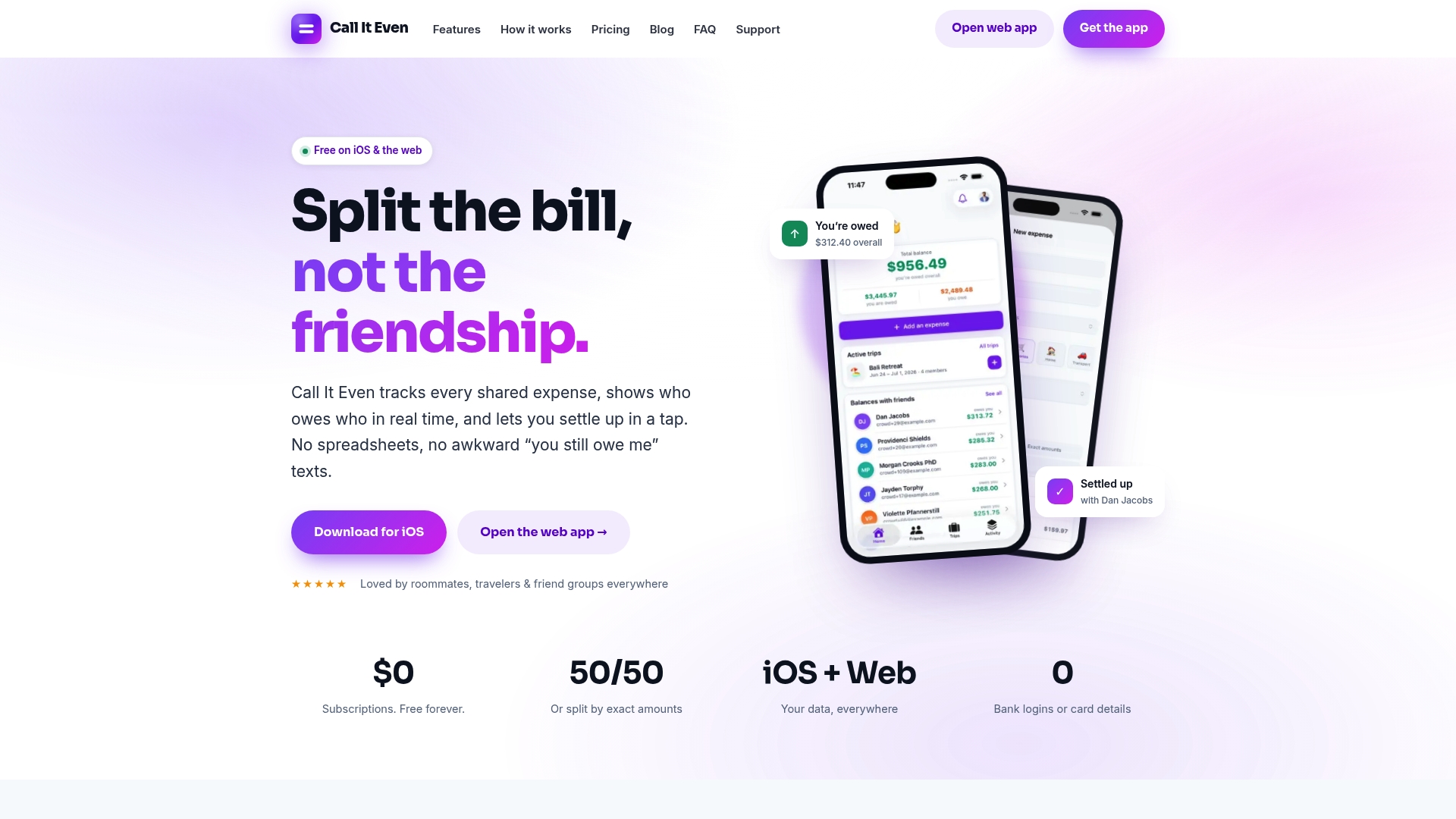
Calliteven lets you add expenses, split costs equally or by exact amounts, and see real-time balances for every person in the group. There are no bank details required and no transaction fees. The app shows a clear ledger of who owes what, so settling up is a single tap. Whether you are managing a group trip, splitting rent with roommates, or dividing project costs with a partner, Calliteven keeps the numbers honest and the friendships intact. It is the scoreboard your group has been missing.
FAQ
What is mutual cost tracking in simple terms?
Mutual cost tracking is the practice of recording all shared expenses against an agreed budget so every person in the group can see what has been spent and what is owed. It prevents disputes by making financial information visible to everyone involved.
How do you track mutual costs without a complicated system?
A basic spreadsheet or a dedicated expense-splitting app that logs date, category, amount, and who paid is sufficient for most small groups. The key is logging expenses at the moment they happen and reviewing the ledger regularly as a group.
Why is expense coding important in mutual cost tracking?
Expense coding ties each cost to a specific category or person, which makes it possible to compare actual spending to the original budget. Without it, variance analysis becomes meaningless and financial problems only surface after the fact.
How often should a small group review shared expenses?
Weekly reviews work best for active trips or short projects. Monthly reviews are sufficient for ongoing shared living costs like rent and utilities. The goal is to catch discrepancies while there is still time to act on them.
What is the difference between mutual cost tracking and just splitting a bill?
Splitting a bill is a one-time calculation. Mutual cost tracking is an ongoing process that monitors all shared expenses over time, compares them to a baseline budget, and flags variances before they become disputes. It is the difference between a single transaction and a running ledger.