

Group debt tracking is the systematic recording of every shared expense within a group, calculating exactly what each person owes, and maintaining a live ledger until everyone is settled. It replaces the mental math, the awkward texts, and the forgotten IOUs that quietly damage friendships. Understanding how group debt tracking works is the first step to keeping money from becoming a source of tension on trips, in shared housing, or at group dinners. Modern tools like Call It Even bring AI receipt scanning, multiple split modes, and real-time balances to this process, making fairness automatic rather than negotiable.
How does group debt tracking work?
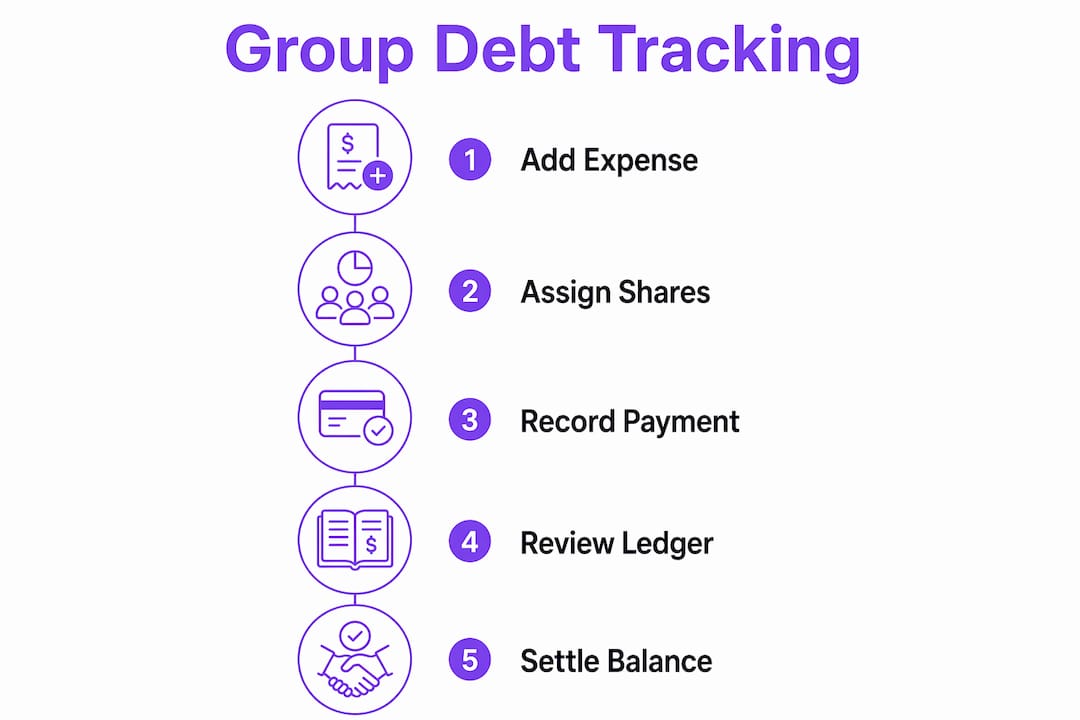
Group debt tracking works by capturing each expense as it happens, assigning a portion of that cost to every relevant group member, and updating a shared ledger in real time. Think of it as a running scoreboard. Every time someone pays for dinner or a hotel room, the app records who paid, how much, and who benefits from that payment. The ledger adjusts automatically, so you always know who owes what without doing any math yourself.
The core principle is simple: one person pays, many people benefit, and the system records the difference. That difference becomes a debt. Over time, a group accumulates dozens of these small debts, and the tracking system consolidates them into a clear picture of net balances. Without a system, those balances live in someone’s head or a group chat, which is where disputes start.

Transparent record-keeping with accessible audit trails is the foundation of any debt tracking system that actually works. This principle holds whether you are managing corporate accounts or splitting a beach house rental with five friends.
What are the main ways group debts are split and tracked?
The method you use to split a bill shapes how accurate and fair your tracking will be. Most groups default to equal splits, but that approach breaks down fast when people order different things or skip a shared activity.
The four main split methods are:
- Equal split. The total is divided evenly among all members. Simple and fast, but unfair when spending varies.
- Exact amount. Each person is assigned a specific dollar amount. Best for itemized bills where everyone ordered differently.
- Exact amounts. Each person is assigned the precise figure they owe — the way to handle rent that tracks income, one person taking a double portion, or any ratio you have agreed: work the numbers out once and enter them.
Multiple split modes reduce errors and manual calculations by matching the split method to the actual spending situation. A group that always uses equal splits on itemized restaurant bills is building inaccuracy into every record.
Taxes and tips add another layer of complexity. Modern platforms handle taxes and tips proportionally when assigning expenses, so the person who ordered the $8 appetizer does not pay the same tip as the person who ordered the $40 steak. That proportional logic is what separates a real tracking system from a rough estimate.
Pro Tip: Set your split method before adding the expense, not after. Changing a split retroactively on a shared ledger can confuse other group members and create duplicate adjustments.
How does technology improve group debt tracking?
Manual spreadsheets and group chats are the old way. Modern apps replace both with automated workflows that are faster and more accurate.
The biggest leap forward is AI-assisted receipt scanning. Here is how it works in practice:
- You take a photo of the receipt after dinner.
- The app’s AI extracts each line item automatically.
- You assign each item to the person who ordered it.
- The app calculates each person’s share, including proportional tax and tip.
- The ledger updates instantly for every group member.
AI receipt scanning extracts line items so groups can split complex bills by exact amounts rather than rough equal divisions. That precision matters when a group of eight people has wildly different tabs at the same restaurant.
The scanning tools also include zoomable receipt viewers and correction prompts so you can fix any misread items before they hit the ledger. This reduces the back-and-forth that happens when someone disputes a charge after the fact.
Beyond scanning, two other features make a real difference in group debt management. First, multi-currency support handles international trips without requiring manual conversion. Second, debt simplification algorithms minimize the total number of payments needed by balancing debts across the group. Instead of six people sending six separate payments, the algorithm might reduce that to three targeted transfers. That efficiency speeds up settlements and reduces the friction of chasing people down.
Groups can be automatically archived after periods of inactivity, keeping your dashboard clean and your active groups easy to find. Dashboard views also show per-person balances across multiple groups at once, so you can see your full financial picture without switching between screens.
Common challenges in group debt management and how to address them
Even with good tools, group debt management runs into predictable problems. Knowing them in advance means you can sidestep them.
- Inactive members. Someone leaves the trip early or stops responding. The solution is to settle their balance before they leave, not after.
- Guest participants. A friend joins for one dinner but is not in the group. Guest bill splitting with no account needed solves this. Guests can be added via a shareable link or QR code without creating a full account.
- Delayed settlements. People forget to pay. Smart alerts and email notifications automatically remind members of due payments, removing the need to send awkward personal reminders.
- Disputed charges. Someone does not remember agreeing to a shared expense. An accessible audit trail with timestamps and payer records resolves this without a conversation turning into an argument.
- Currency confusion on international trips. Mixing currencies in a manual ledger creates rounding errors. Multi-currency support in a dedicated app eliminates this entirely.
Audit trails deter disputes and delays in any debt tracking context. A clear record of who added an expense, when, and for how much is the fastest way to end a disagreement.
Pro Tip: Agree on your tracking app and split rules before the trip starts, not during it. Setting expectations upfront removes the negotiation from moments when people are tired or hungry.
How to set up group debt tracking for your group
Getting a group tracking system running takes less than ten minutes. The setup process follows a clear sequence.
- Create the group. Name it after the trip or occasion. Add a start date so the ledger has a clear beginning.
- Invite members. Send invitations via the app, a shareable link, or a QR code. For guests who will not create an account, use the guest split feature.
- Choose your default split mode. Pick the method that fits your group’s spending style. Most travel groups do well with exact splits for meals and equal splits for shared accommodations.
- Add expenses as they happen. Real-time entry is more accurate than batch entry at the end of the trip. Receipts fade, and memories are worse.
- Review balances regularly. A quick check every evening keeps surprises from piling up. Most apps show a per-person balance summary on the main dashboard.
- Settle up before the group disbands. Use the app’s settlement feature to record payments. One-tap settlement options connected to payment platforms speed this up considerably.
The table below shows which split mode works best for common group spending situations.
| Spending situation | Recommended split mode |
|---|---|
| Shared Airbnb or hotel room | Equal split |
| Restaurant with individual orders | Exact amount |
| Group activity with tiered pricing | Percentage or shares |
| Groceries for a shared household | Equal split |
| International trip with mixed currencies | Exact amount with multi-currency support |
For group trip expenses, the combination of real-time entry and exact splits produces the most accurate ledger at the end of the trip. Groups that batch-enter expenses on the last day consistently report more disputes than those who log as they go.
Why transparency is the real point of tracking group debts
The technology is useful, but the goal is not efficiency for its own sake. The goal is trust. When everyone in a group can see the same ledger, the same balances, and the same history, money stops being a source of suspicion. Nobody has to take anyone’s word for it.
Call It Even was built on that idea. The app never touches your bank details or processes transactions. It is purely a scoreboard. The payment is your business. The record is shared. That separation matters because it keeps the app neutral. No one in the group has an information advantage, and no one can quietly revise the history.
The misconception I see most often is that people think tracking is for distrustful groups. It is actually the opposite. Groups that track clearly are the ones that trust each other enough to be honest about money. The groups that avoid tracking are the ones where someone always ends up feeling shortchanged.
Emerging AI features will make this even easier. Automatic receipt scanning, smarter debt simplification, and proactive settlement reminders will reduce the effort of tracking to near zero. But the human benefit, which is the ability to travel or live with people without money becoming a wedge, will stay the same. Read more on the Call It Even blog for practical guides on making group finances work without friction.
— Call It Even
Call It Even makes group debt tracking simple
Call It Even is built for exactly this situation: a group of friends, a shared trip, and the need to keep finances clear without turning every dinner into a math problem.
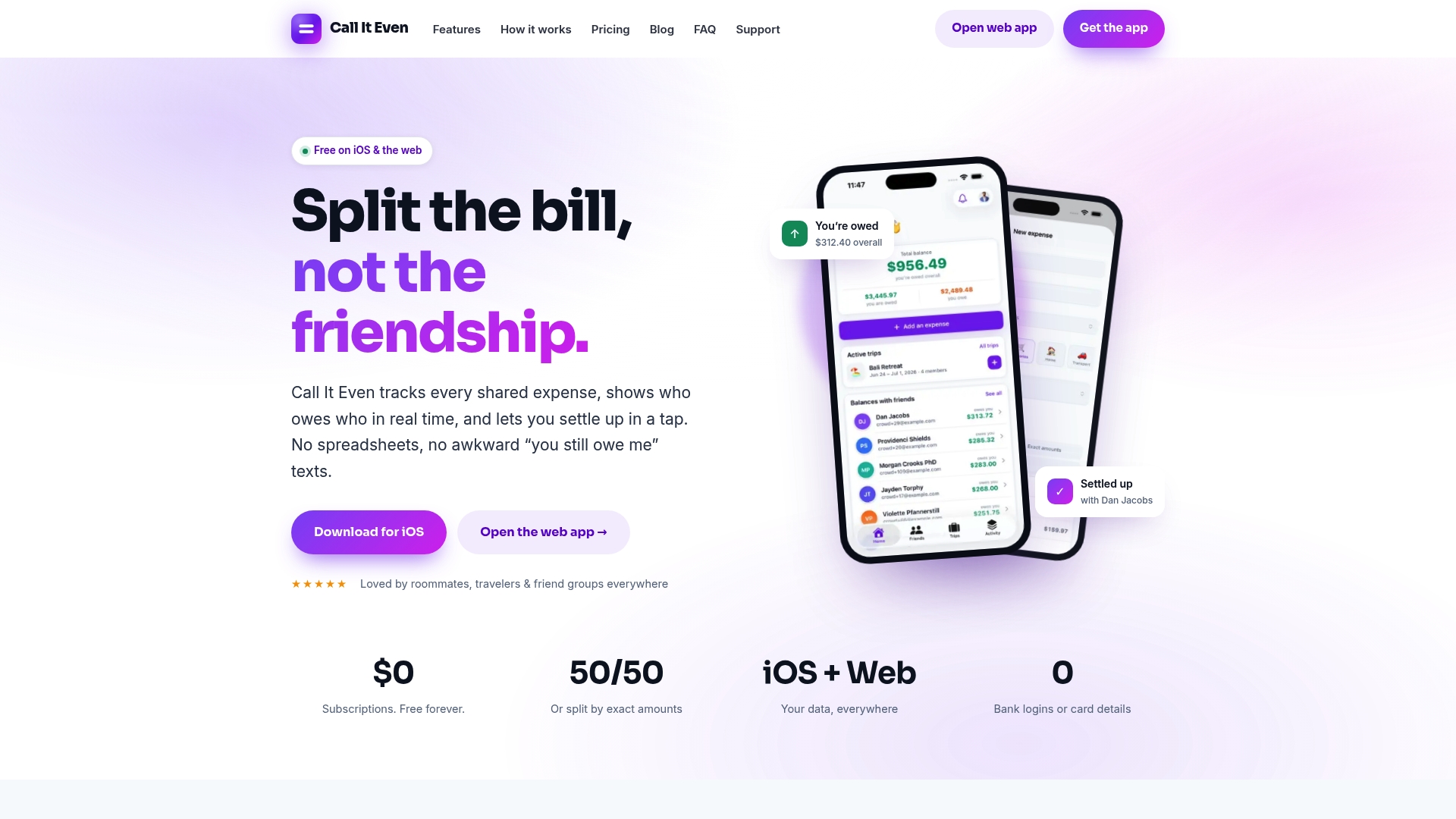
The app handles AI-powered receipt scanning, multiple split modes, multi-currency support, and one-tap settlement recording. You add the expense, assign the shares, and the ledger updates for everyone instantly. No bank details required, no transaction fees, and no spreadsheets. For groups that want to settle up cleanly and keep the focus on the trip rather than the tab, Call It Even is the clearest path from “who owes what” to “we’re all square.” Try Call It Even and see how fast a shared ledger can take the stress out of group spending.
Key takeaways
Group debt tracking works because it replaces memory and guesswork with a shared, real-time ledger that every member of the group can see and trust.
| Point | Details |
|---|---|
| Use the right split mode | Match your split method to the spending situation to keep the ledger accurate and fair. |
| Log expenses in real time | Entering costs as they happen prevents disputes and reduces end-of-trip reconciliation errors. |
| Let AI handle receipts | AI receipt scanning extracts line items and calculates proportional tax and tip automatically. |
| Simplify settlements | Debt simplification algorithms reduce the number of transfers needed, speeding up final payouts. |
| Transparency builds trust | A shared, accessible audit trail removes suspicion and keeps group relationships intact. |
FAQ
What is group debt tracking?
Group debt tracking is the systematic recording of shared expenses among a group, calculating each person’s exact balance, and maintaining a live ledger until all debts are settled.
How do split modes affect accuracy in debt tracking for groups?
Splitting by exact amounts rather than forcing an even divide matches the calculation to the actual spending pattern. Equal splits applied to unequal spending create inaccurate records and disputes.
Can guests participate in group debt tracking without an account?
Yes. Apps that support guest bill splitting allow non-members to be included via a shareable link or QR code, with no account creation required.
How does debt simplification work in group finance apps?
Debt simplification algorithms calculate the minimum number of payments needed to settle all balances. Instead of multiple transfers between every pair of members, the algorithm routes payments efficiently to clear all debts in fewer steps.
How do reminders help with group debt accountability?
Automated alerts and email notifications prompt members when a payment is due or a new expense is added. This removes the need for manual follow-up and keeps settlements on track without awkward personal messages.