

Settling debts in a friend group is straightforward when everyone agrees on a fair method and communicates openly about money. The formal term for this process is “debt settlement within shared expense groups,” and it covers everything from splitting a dinner bill to balancing a week-long vacation ledger. Poor handling of shared costs is one of the most common sources of tension in friendships. A clear process protects both your wallet and your relationships.
How to settle debts in a friend group without the awkwardness
The awkwardness in settling debts almost always comes from unclear expectations. When nobody sets a timeline or a method upfront, repayment requests start to feel like accusations. The fix is simple: treat settlement like a normal part of the group plan, not an afterthought.
Start every shared expense situation with a quick agreement on three things: who tracks the costs, how you will split them, and when you will settle up. This does not need to be a formal meeting. A single message in the group chat works fine. Setting a clear deadline like “let’s settle by Wednesday night” normalizes repayment and removes the social pressure from asking for money back.

Communication style matters too. Framing repayment as housekeeping rather than a favor changes the whole tone. “Hey, we’re settling up Thursday” lands very differently than “You still owe me from last weekend.” One is a shared task. The other sounds like a complaint.
When someone genuinely cannot pay the full amount right away, partial payments are a reasonable option. Agree on a partial amount and a final deadline. This keeps the relationship intact without letting the debt drag on indefinitely.
- Set a repayment deadline before or during the shared expense, not after.
- Use a group chat to confirm the method and timeline so everyone is aligned.
- Normalize partial payments when needed, with a clear final date.
- Frame settlement as routine group housekeeping, not a personal request.
Pro Tip: Bring up settlement at the start of a trip or event, not at the end. It feels less awkward when it’s part of the plan from day one.
What are the fairest ways to split shared expenses?
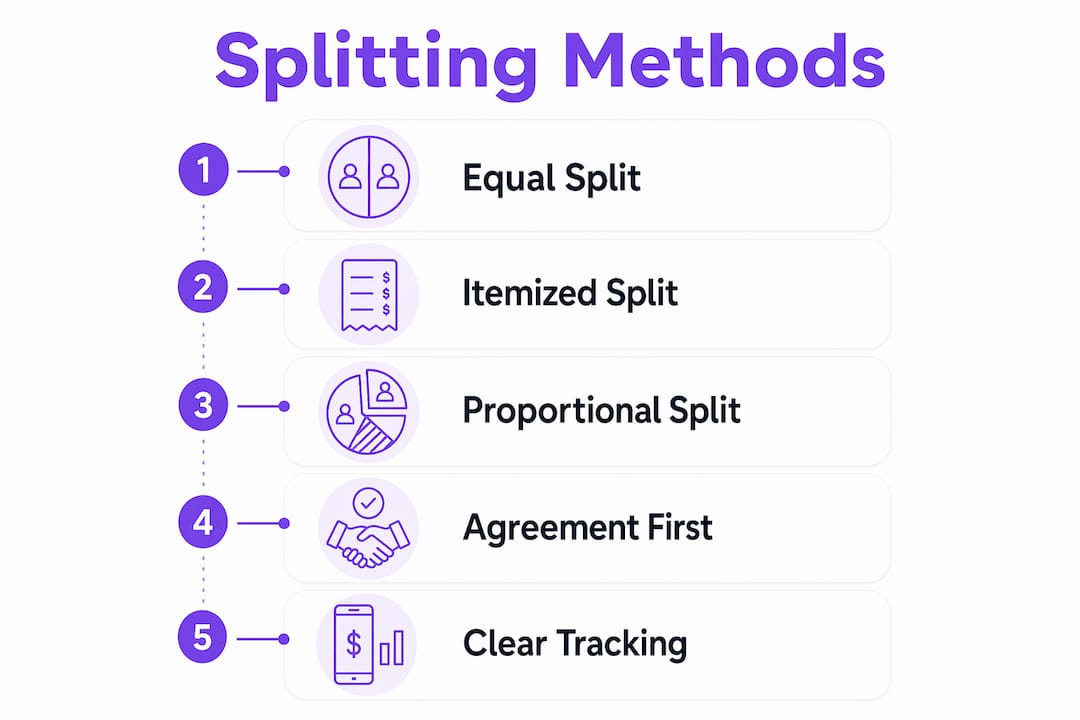
Three main splitting methods cover most group expense situations: equal split, itemized split, and proportional split. Each one works best in a specific context.
Equal split
An equal split divides the total cost by the number of people. It works well when everyone orders roughly the same thing or uses the same service equally. The math is simple, and nobody has to argue over line items. The downside is that it can feel unfair when one person orders a $50 entrée and another orders a $15 salad.
Itemized split
An itemized split ensures each person pays for exactly what they consumed. Experts recommend this method over equal splits for uneven expenses because it distributes tax and tip proportionally. It takes more effort to calculate, but it eliminates the “I only had a salad” complaint entirely.
Proportional split
A proportional split applies to situations where costs scale with usage. Think vacation rentals where one couple takes the master bedroom and another takes a smaller room. The couple in the larger room pays a higher share. This method requires a bit more negotiation upfront, but it is the most accurate reflection of actual use.
| Splitting method | Best for | Pros | Cons |
|---|---|---|---|
| Equal split | Similar consumption levels | Fast, simple, no calculation needed | Unfair when spending varies widely |
| Itemized split | Restaurants, mixed orders | Accurate, no subsidizing others | Time-consuming to track each item |
| Proportional split | Rentals, tiered usage | Reflects actual use fairly | Requires upfront agreement on ratios |
Agree on the splitting method before the expense happens. Trying to renegotiate the method after the bill arrives is where most disputes start. Rotating payment responsibility among friends for recurring shared costs is another effective tactic. One person covers dinner this week, another covers it next week, and the ledger balances over time without anyone doing math.
Pro Tip: For group trips, decide on the splitting method during the planning stage. Add it to the same message where you confirm the dates and accommodation.
Why digital tools make balancing debts in social groups easier
Tracking shared expenses manually on a notes app or spreadsheet works for two people. For groups of four or more, it breaks down fast. Someone forgets to log an expense. Another person pays twice. The ledger becomes unreliable, and nobody trusts the final numbers.
Digital expense tracking apps solve this by recording every transaction automatically. App-based settlements calculate net positions for each person and generate the minimum number of transfers needed to clear all debts. Instead of six people making payments to each other in every direction, the app might produce just three transfers that settle everything.
Key features to look for in a group expense app:
- Real-time balance visibility so everyone sees who owes what at any moment.
- Expense categories to separate food, transport, and accommodation costs.
- Multi-currency support for international trips.
- No requirement to link bank accounts or process actual transfers.
Digital payment records eliminate the need to chase anyone for payment because the ledger is visible to the whole group. Transparency removes the “I didn’t know I owed that” excuse and keeps everyone accountable without anyone having to play debt collector.
Calliteven is built specifically for this. It tracks expenses, splits costs equally or by exact amounts, shows real-time balances, and lets the group settle up easily without fees or bank details. Think of it as the scoreboard everyone can see, so nobody argues about the final score.
Pro Tip: Choose a tool the whole group will actually use. The best app is the one with the lowest barrier to entry for your least tech-savvy friend.
Step-by-step process to settle outstanding group debts
A clear sequence makes repaying friends fairly much less stressful. The goal is to minimize the number of transfers and eliminate confusion about who pays whom.
The settlement sequence
- Log every expense as it happens. Assign one person to track costs, or use a shared app where everyone can add entries.
- Wait until all expenses are recorded before settling. Settling too early during a multi-day trip creates confusion and leads to more payments later.
- Calculate net balances. Each person’s total spending minus their fair share equals what they owe or are owed.
- Minimize transfers. If Alex owes Jordan $20 and Jordan owes Sam $20, Alex can pay Sam directly. One transfer clears two debts.
- Set a single settlement date. Pick a specific day after the trip or event ends. Everyone pays their net balance on that date.
- Use a clear payment method. Cash, bank transfer, or a payment app all work. Agree on the method in advance so nobody has an excuse for delay.
- Confirm receipt. Once paid, mark the debt as settled in your tracking system so the ledger closes cleanly.
Paying your share upfront when possible avoids the frustration of reminders entirely. If you know your portion of the accommodation before the trip, transfer it before you leave. This keeps the group ledger lighter and reduces the final settlement to smaller, less contentious amounts.
| Approach | Effort | Accuracy | Best for |
|---|---|---|---|
| Manual tracking (notes/spreadsheet) | High | Moderate | Small groups, simple expenses |
| App-based tracking | Low | High | Groups of 4+, trips, recurring costs |
| Rotating payments | Low | High over time | Regular, recurring group expenses |
Tracking all expenses first and settling once at the end reduces the total number of payments and prevents the double-transfer confusion that comes from settling after each individual expense.
Key Takeaways
Settling debts in a friend group works best when you agree on a splitting method upfront, track every expense in real time, and settle all balances in a single planned session.
| Point | Details |
|---|---|
| Set expectations early | Agree on the splitting method and settlement deadline before expenses begin. |
| Choose the right split | Use itemized splits for uneven orders and equal splits when consumption is similar. |
| Settle once, not often | Log all expenses first, then settle in one session to minimize transfers and confusion. |
| Use a tracking app | Apps calculate net balances automatically and reduce the number of transfers needed. |
| Normalize the conversation | Frame settlement as routine group housekeeping to remove social awkwardness. |
Money and friendship: what I’ve learned the hard way
The most common mistake I see groups make is waiting until the end of a trip to have the money conversation for the first time. By then, everyone has a different memory of what was spent, who paid for what, and what the agreed split was. The disagreement is not really about money. It is about the feeling that someone was not paying attention or did not care enough to keep track.
The groups that handle shared finances well share one habit: they make the money conversation boring. They set up a system at the start, everyone logs expenses as they go, and settlement is just a five-minute task at the end. No drama, no resentment, no awkward texts three weeks later.
The other thing I have noticed is that the person who always pays upfront and waits to be reimbursed carries a disproportionate emotional load. Even if the math works out, the act of chasing repayment is exhausting. Rotating that responsibility, or using an app that makes the ledger visible to everyone, distributes that load fairly. For group trip expenses in particular, a shared digital ledger changes the dynamic completely. Nobody is the “money person.” Everyone is equally accountable.
The tools exist to make this easy. The only thing left is the willingness to set up the system before the first expense hits.
— The
Calliteven makes settling up simple for any group
Keeping track of who owes what across a whole trip or shared living situation is exactly what Calliteven was built for.
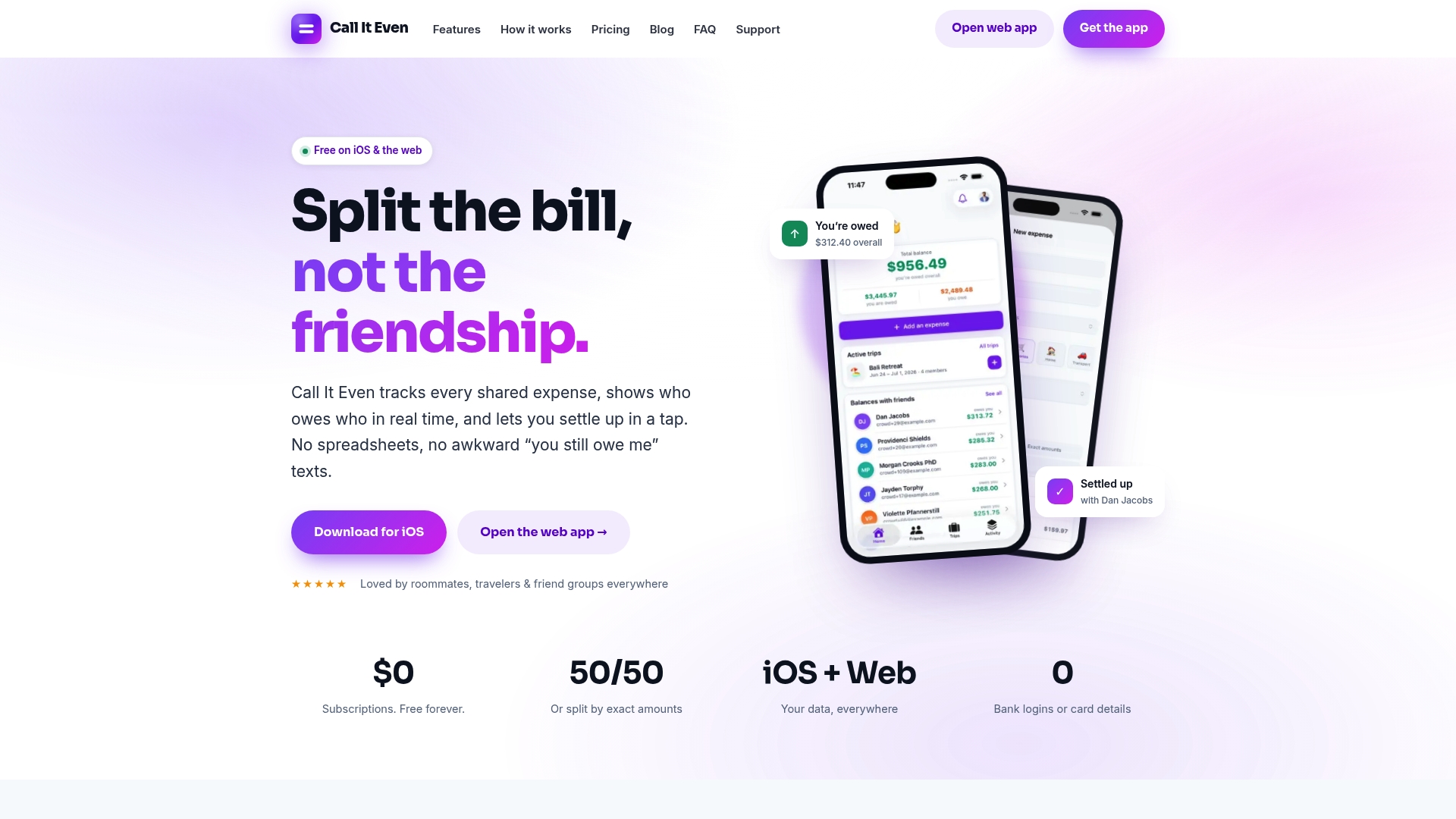
You add expenses as they happen, choose how to split them, and the app shows everyone’s real-time balance. No spreadsheets, no mental math, no awkward “hey, you still owe me” texts. Calliteven never asks for bank details or handles actual transfers, so your financial privacy stays intact. When it’s time to settle up, the app tells you exactly who pays whom and how much. Try Calliteven and turn the money conversation into a five-minute task your whole group can agree on.
FAQ
How do you settle debts in a friend group fairly?
Agree on a splitting method before expenses begin, track every cost in a shared ledger, and settle all balances in one planned session. Using an app to calculate net positions reduces the number of transfers and removes guesswork.
What is the best way to split bills with friends?
The best method depends on the situation. Use an equal split when everyone spends similarly, and an itemized split when orders or usage vary. Agree on the method before the bill arrives.
How do apps help with managing group expenses?
Expense tracking apps log every transaction automatically, calculate each person’s net balance, and generate the minimum transfers needed to settle up. This removes the need to chase payments and keeps the whole group accountable.
When should a group settle shared debts?
Settle once after all expenses are recorded, not after each individual purchase. Settling too early during a trip leads to confusion and extra transfers.
How do you avoid awkwardness when asking friends to repay you?
Set a repayment deadline at the start of the shared expense, not at the end. Framing settlement as a normal group task rather than a personal request removes most of the social tension.