

When one person in a group is short on money, the fair move is to change what gets planned rather than what gets split — pick things everyone can afford, and let anyone opt out of individual costs without a discussion. Splitting evenly is only fair when everyone can pay evenly. Call It Even helps by making each person’s share visible before the money is spent, which is the moment someone can still say “not this one” without it costing them anything socially.
Is splitting evenly always fair?
No — an even split is fair in effort and blind in effect. Forty dollars is a rounding error to one person and a real decision to another, and a group that only ever splits evenly is quietly organising itself around whoever earns the most.
- Even splitting is a good default, because it is simple and it avoids anyone having to declare their finances.
- It stops being fair when the plan itself is chosen by people who don’t have to think about the cost.
- The fix is upstream. Change what you do, not how you divide it — that is the change that costs nobody their dignity.
How do you bring it up without making it awkward?
Say it early, say it about the plan rather than about yourself, and offer an alternative in the same breath. “That place is a bit steep for me this month, want to do the taco place instead?” is a sentence that costs nothing and changes everything. It moves the conversation to logistics before it can become a conversation about money.
- Before the booking, not after the bill. Once a reservation exists, opting out reads as rejecting the group.
- Propose, don’t decline. An alternative keeps you in the plan; a refusal takes you out of it.
- You don’t owe anyone the details. “Not this month” is a complete sentence.
- Pick your moment — in the group chat while plans are forming, not at the table with the menu open.
What should the rest of the group do?
Make it easy to spend less without anyone having to ask, and stop treating every plan as all-or-nothing. The most useful thing a well-off friend can do is quietly propose cheaper options often enough that choosing one is never a signal.
| Instead of | Try |
|---|---|
| “We’ll just split it evenly” | “Let’s put the drinks on whoever’s drinking” |
| A single expensive plan | A cheap plan most weeks, an expensive one occasionally |
| Assuming everyone’s in | “Come for the first part if you want” |
| Quietly covering someone | Choosing something they can actually afford |
| Bringing up what they owe in the group chat | One private message, once |
Pro Tip: Rotate who picks the plan. It is the simplest structural fix there is — when everyone chooses in turn, the group’s spending naturally averages toward what the group can actually afford, and nobody has to advocate for a cheaper night.
Should you just cover someone who can’t pay?
Sometimes, but do it as a gift and say so — a “don’t worry about it” that is silently logged as a debt in your head is how friendships get quietly damaged. If you cover someone, decide at that moment whether it is a gift or a loan, and tell them which.
- If it’s a gift, say “this one’s on me” and never mention it again. Not once.
- If it’s a loan, say so and record it, so they can repay it without having to guess the amount.
- Don’t cover people repeatedly and silently. It builds a debt only one person knows about.
- Don’t refuse to be covered out of pride if someone offers genuinely — accepting graciously is its own kindness.
How do you handle owing money you can’t pay right now?
Say when you can pay rather than going quiet, because silence is the thing that actually damages the friendship. Almost nobody minds waiting. Everybody minds being ignored, and a balance that goes unacknowledged for six weeks becomes a story about character rather than cash flow.
“I’ve got you for the $60 — can I get it to you after the 15th?” ends the matter. It converts an open-ended worry into a date, and dates are easy to wait for.
- Acknowledge the amount so the other person knows you know.
- Name a date, even a vague one, and then meet it.
- Pay something if you can’t pay everything — partial payment signals good faith better than any message.
- Keep it visible in a shared record so neither of you is tracking it from memory.
How does a shared record help rather than pressure?
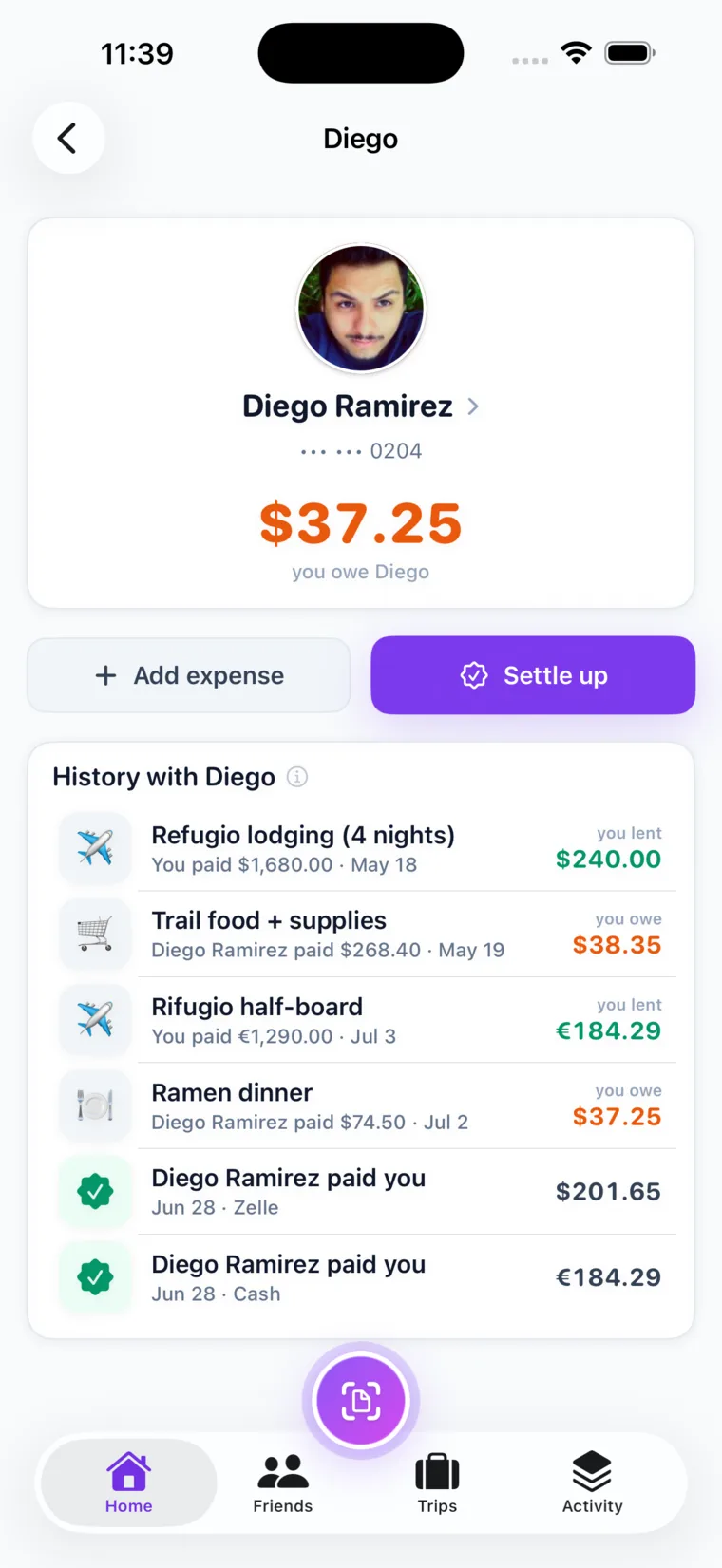
It removes the asking. Most of the discomfort around money between friends is not the debt — it is the series of small social acts required to mention it, each of which costs the asker something and the ower more. A visible balance does that work without either person having to start a conversation.
- Everyone sees the same number, so nobody is guessing or second-guessing.
- Nobody has to send the message that begins “sorry to be annoying, but”.
- Partial payments show up, which lets someone pay down a balance visibly over time.
- It is a record, not a demand. The app never requests money, chases anyone, or moves a cent — it only shows where things stand.
Call It Even keeps the numbers visible and the asking out of it: everyone sees their share before the money is spent, and the balance updates itself as people pay. Get Call It Even free on iPhone, Android and the web.
Key takeaways
| Question | Answer |
|---|---|
| The real fix | Change the plan, not the split. |
| How to say it | Early, about the plan, with an alternative attached. |
| What the group can do | Propose cheaper options often, and rotate who picks. |
| Covering someone | Decide gift or loan at that moment — and say which. |
| Owing money | Name a date. Silence damages more than delay. |
| Why a shared record helps | It removes the need to ask, on both sides. |
FAQ
How do you tell friends you can’t afford something?
Say it while plans are still forming, frame it as being about the plan rather than yourself, and offer a cheaper alternative in the same message. “That’s a bit steep for me this month, how about somewhere else?” keeps you in the evening instead of out of it.
Is it fair to split evenly when people earn very different amounts?
Even splitting is fair in effort but blind in effect — the same $40 is trivial for one person and a real decision for another. Rather than weighting every bill, change what the group plans, so the default night out is affordable for everyone.
Should you pay for a friend who can’t afford to come?
Only as an outright gift, and only if you say so plainly. A silent “don’t worry about it” that you privately count as a debt is how resentment starts. If it is a loan, call it a loan and record the amount so they can repay it without guessing.
What do you say when you can’t pay someone back yet?
Acknowledge the amount and name a date. Almost nobody minds waiting; people mind being ignored. A partial payment, even a small one, signals good faith more clearly than any explanation.
How do you ask for money back without being pushy?
Let a shared record do the asking. When both people can see the same balance, the amount is already communicated, and any message you do send can be about the timing rather than the fact of the debt.
Recommended
- How to Talk About Money with Friends – Call It Even
- Should Friends Split Everything Evenly? – Call It Even
- How to Get Friends to Pay You Back – Call It Even
- Split Expenses – Call It Even