

The fair way to split holiday travel costs is to separate the things everyone shares from the things each person chose, split the first evenly and leave the second with whoever chose it. Christmas and Thanksgiving travel is unusually messy because it mixes family and friends, hosts and guests, people who drove four hours and people who flew, all inside a week when nobody wants to talk about money. Call It Even keeps the running total in one place so the conversation happens once, in January, instead of in the kitchen on the day.
What counts as a shared cost and what doesn’t?
A shared cost is one the group would still have incurred if any one person had stayed home; a personal cost disappears when that person does. That single test settles most holiday arguments before they start.
| Usually shared | Usually personal |
|---|---|
| The big grocery run for the main meal | Your own flight or train ticket |
| A rented house or extra rooms for everyone | The upgrade you chose to a bigger room |
| Drinks and snacks for the house | Gifts you bought for other people |
| A rental car the group uses all week | Your dog’s boarding while you’re away |
| Firewood, decorations, board games | The extra night you stayed on at the end |
Who pays for getting there?
Almost always the traveller — flights and fuel are personal costs, because they buy one person’s presence rather than anything the group consumes. The exception is worth naming out loud: when the location is chosen for one family’s convenience, the people who travel furthest are carrying a cost the hosts are not.
- Everyone pays their own fare as the default, and it is rarely contested.
- If the host’s house is always the venue, hosts often cover more of the food to balance the flights others pay.
- Driving someone else there? Fuel and tolls split between the people in the car, not the whole group.
- Points and miles are not free to the person who earned them — but they are usually a gift rather than a shared cost, and it is kinder not to invoice for them.
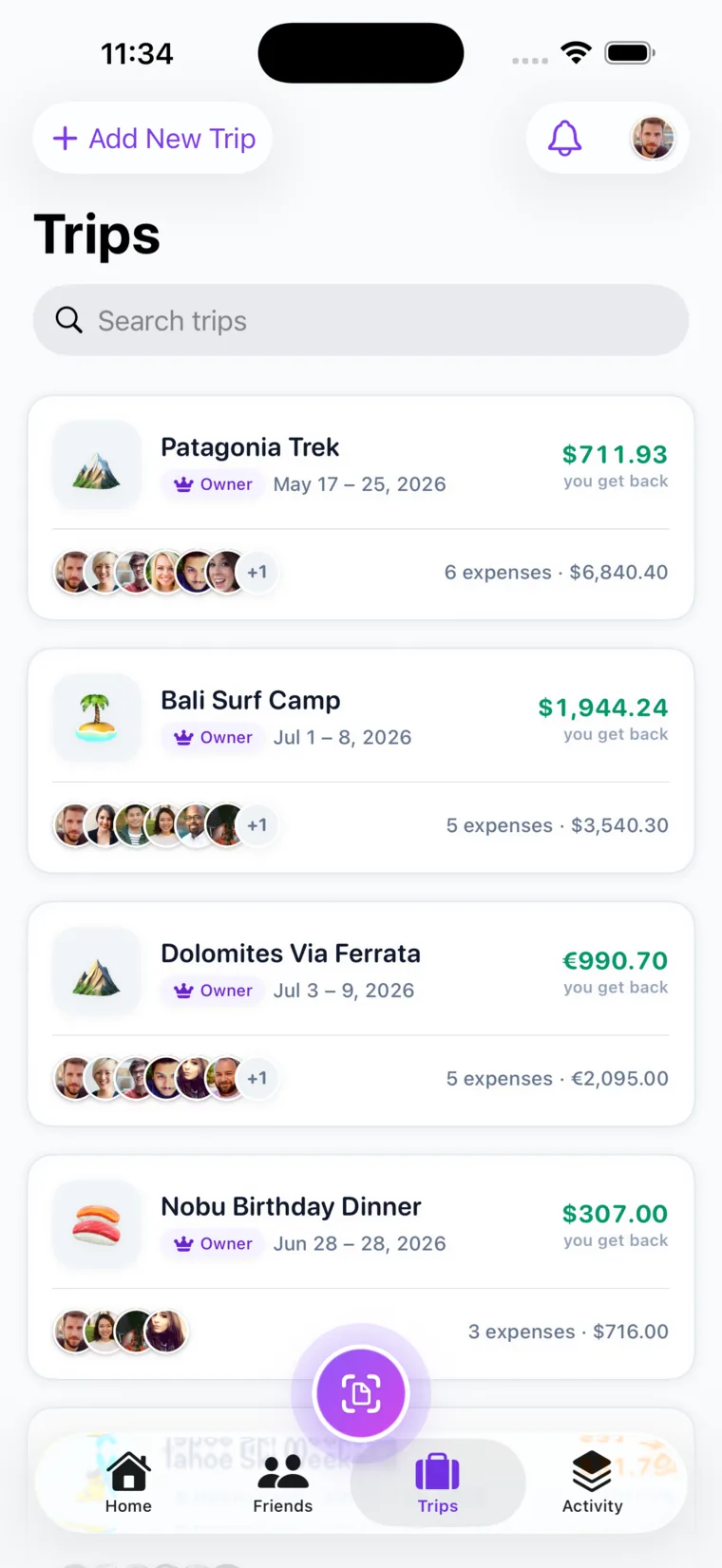
How should a family split the cost of the holiday meal?
Split the groceries between the adult households rather than the adult heads, because a couple with two children eats more than one person travelling alone and pays the same either way. Splitting per household is the norm and it is close enough to fair that nobody audits it.
- One person shops so there is one receipt and one number, instead of six people buying cranberries.
- Split by household, not per person, unless the household sizes are wildly uneven.
- Hosts frequently take a smaller share or none at all, because they are absorbing the house, the oven and the cleanup.
- Assign the extras. Whoever wants the expensive wine buys the expensive wine.
Pro Tip: Log the grocery run from the parking lot before you drive home. The receipt is in your hand, the total is fresh, and you will never do it once the house is full of people.
What does the host actually owe?
Less than they usually pay, and far less than they tend to ask for. Hosting absorbs real money that never shows up on a receipt: heating a full house for a week, the dishwasher running four times a day, the wear on everything. Most families handle this by convention rather than accounting, and the convention is a good one — guests cover consumables, hosts cover the house.
The most common holiday money problem is not an unfair split. It is that the host quietly spends four hundred dollars, mentions none of it, and feels differently about the whole week afterwards.
How do you split when incomes are very different?
Agree the proportions between yourselves, then record them exactly as agreed — a sibling in their first job and a sibling fifteen years into a career can split a week’s groceries 30/70 without either of them feeling odd about it, as long as the number was discussed rather than assumed. In Call It Even you can enter the split as percentages, or as exact amounts if the figures are easier to say than the ratios, and either way the parts are checked against the total before the expense saves.
- Decide the shape first, in a conversation, away from the bill.
- Write it down once and apply it to everything that week, so each item isn’t renegotiated.
- Don’t apply it retroactively to things already paid — start it from the next expense.
- Revisit it next year rather than treating it as permanent.
How do you settle up without ruining the holiday?
Record everything as it happens and settle once, after everyone has gone home. Nothing sours a family gathering faster than someone doing mental arithmetic at the table, and nothing is more likely to be quietly forgiven and quietly resented than a cost nobody wrote down.
- One shared Group for the week so every expense lands in the same place.
- Everyone can see the running balance, which means nobody has to ask what they owe.
- Settle in the first week of January, when the credit card bills land and people expect it.
- Not everyone needs the app — you can add people who aren’t on it and still track what they owe.
Call It Even makes holiday travel simple: one Group for the trip, every cost logged as it happens, and a single balance to settle when everyone’s home. Get Call It Even free on iPhone, Android and the web.
Key takeaways
| Question | Answer |
|---|---|
| The test for a shared cost | Would the group still have paid it if one person stayed home? |
| Flights and fuel | Personal. The traveller pays. |
| The holiday meal | Split between households, not heads. |
| The host | Usually pays less, because the house is their contribution. |
| Uneven incomes | Agree proportions in advance, then record them as agreed. |
| When to settle | Once, in January. Never at the table. |
FAQ
Who should pay for holiday flights, the traveller or the family?
The traveller, as the default — a flight buys one person’s presence rather than anything the group consumes. Where the venue is fixed for the hosts’ convenience, families often balance it by having the hosts cover more of the food.
How do you split the cost of a holiday meal between families?
Split the grocery total between the adult households rather than per person, so a couple with children isn’t paying the same as someone travelling alone. Have one person do the shopping so there is a single receipt to divide.
Should the host pay for everything?
No. Hosting already absorbs the house, the utilities and the cleanup, which is a real contribution that never appears on a receipt. The usual convention is that guests cover the consumables and hosts cover the house.
How do you split holiday costs when relatives earn very different amounts?
Agree the proportions in a conversation before the spending starts, then record each expense that way — as percentages, or as exact amounts if those are easier to say. The important part is that the numbers were discussed rather than assumed.
When should you settle up after the holidays?
Once everyone is home, typically in the first week of January when the card statements arrive. Keep a running balance during the week so the settlement is a single payment rather than a reconstruction from memory.
Recommended
- How to Split a Friendsgiving – Call It Even
- How to Split Group Trip Expenses – Call It Even
- How to Split Expenses with Guests – Call It Even
- Groups – Call It Even