
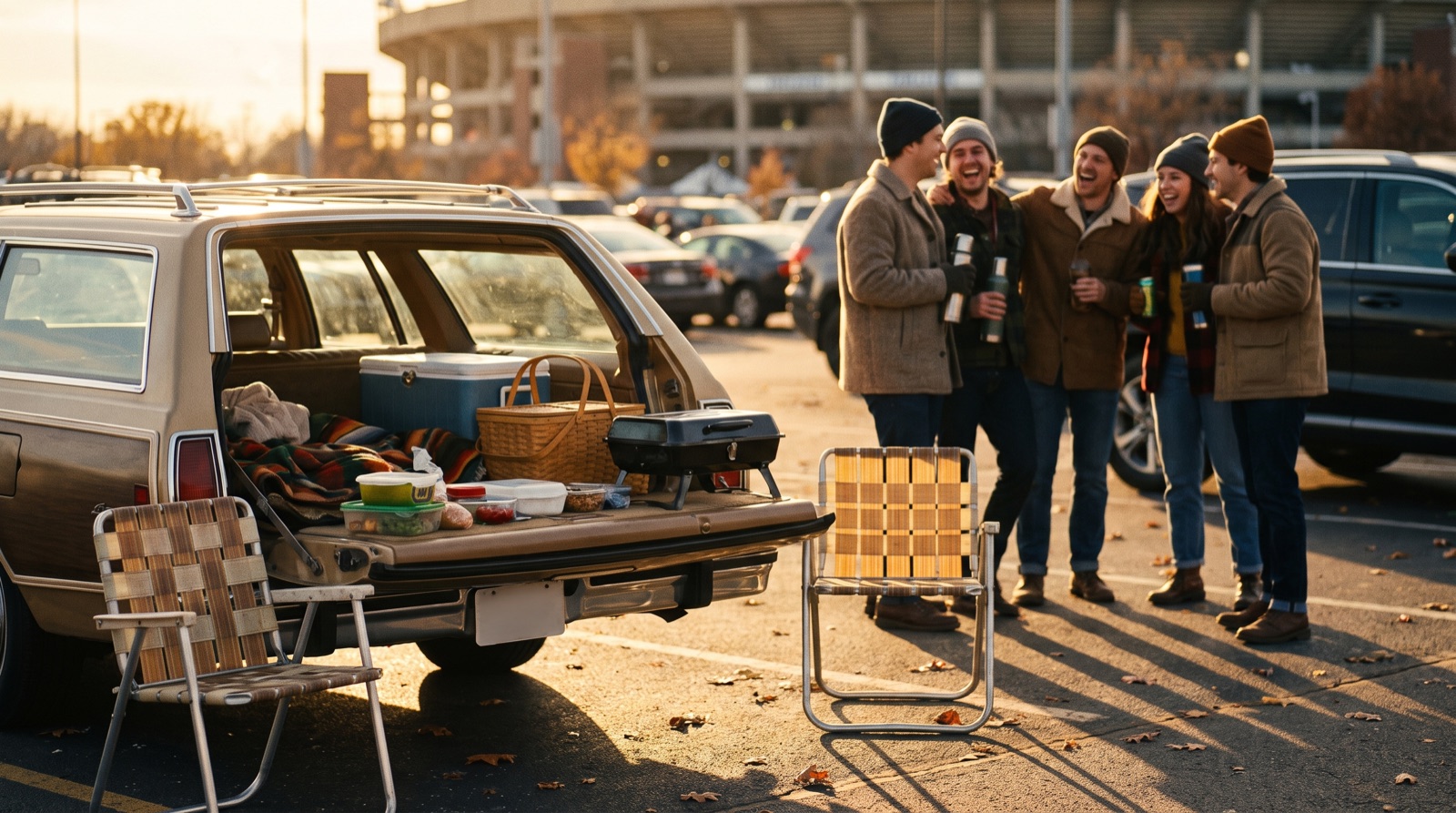
The cleanest way to split a tailgate is to put one person in charge of the food budget, let everyone else claim a category, and settle the difference afterwards rather than at the truck. Game day spending is deceptive: no single item feels expensive, and then someone has spent three hundred dollars on meat, ice, propane and parking before kickoff. Call It Even keeps the running total visible so the person with the grill isn’t also the person absorbing the cost.
What does a tailgate actually cost?
More than anyone estimates, because the spending is spread across four or five people who each think they bought “just a couple of things”. A twelve-person tailgate routinely runs $250–$400 before tickets, and almost none of it gets split unless someone writes it down.
| Category | Typical share of the total | Who usually pays |
|---|---|---|
| Meat and food | Roughly 40% | Whoever cooks — the biggest single bill |
| Beer and drinks | Roughly 30% | Spread across two or three people |
| Ice, charcoal, propane, supplies | Roughly 15% | The host, invisibly |
| Parking and the lot pass | Roughly 15% | Whoever drives the truck |
The last two rows are where tailgates go wrong. Nobody forgets who bought the brisket, and everybody forgets the $40 of ice, the propane refill and the $30 parking pass.
Should you split a tailgate evenly or by what people consumed?
Evenly, for almost every group — a tailgate is a shared table, and itemising it turns a good afternoon into an audit. The exception is alcohol, which is the one category where consumption genuinely diverges enough to be worth separating.
- Food, supplies, parking: split evenly across everyone who showed up.
- Alcohol: split between the people drinking, especially if several people aren’t.
- Kids: usually counted as part of a parent’s share rather than as separate heads.
- Someone who came for an hour: a smaller share is fine, agreed up front rather than claimed afterwards.
How do you stop the host paying for everything?
Assign categories before anyone shops, so the spending is distributed at the source instead of reimbursed afterwards. This is the single highest-value change to how most groups do game day, and it takes one message on Thursday.
- One person on meat, one on drinks, one on sides, one on supplies. Four receipts, four people out of pocket, roughly balanced before anyone settles.
- Whoever hosts the setup — the truck, grill, tent and chairs — should not also be buying the most expensive category.
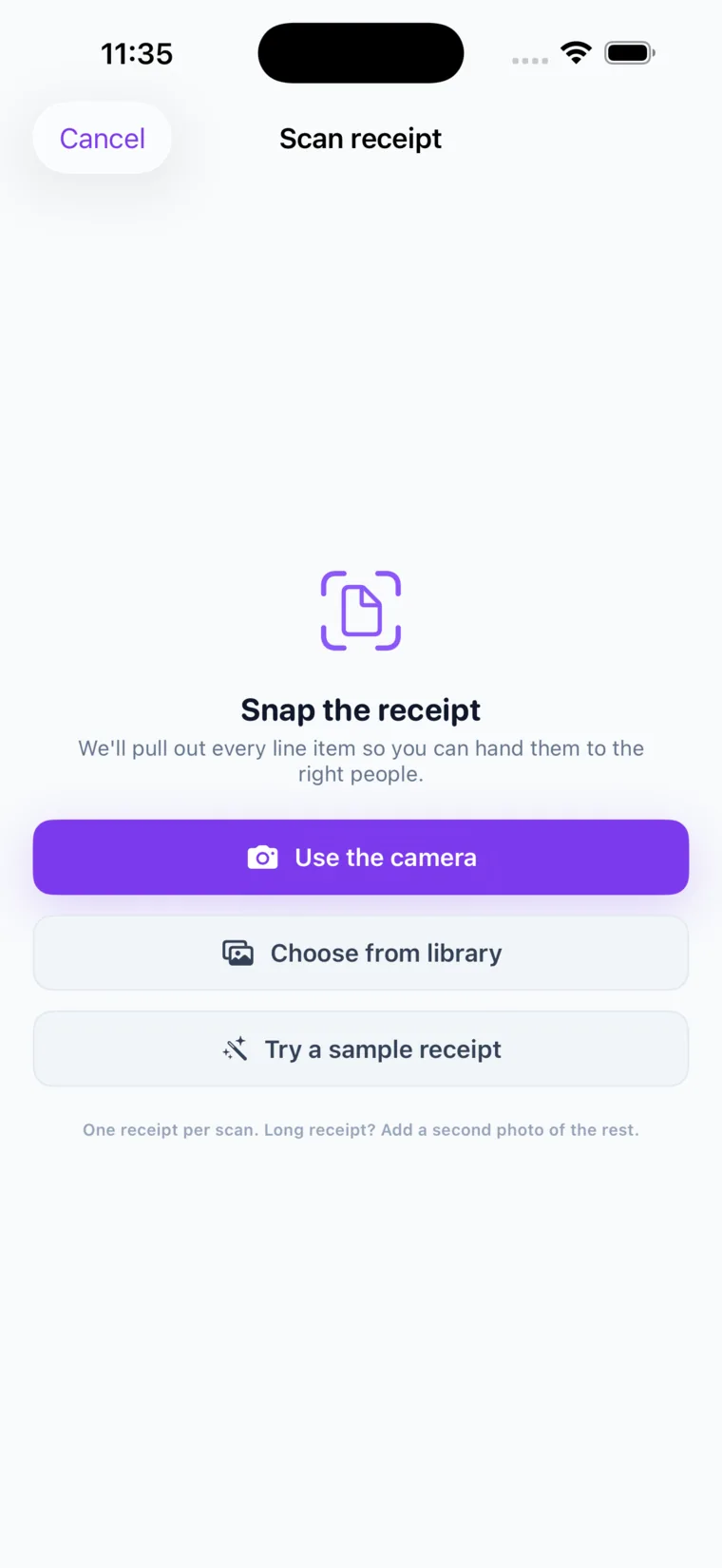
- Log each receipt the day it happens and the balance is basically done by Saturday.
- Let the ledger do the asking. Nobody has to send a message that starts “so about yesterday”.
Pro Tip: Add the parking pass and the propane refill the moment you pay for them. These are the two costs that never make it into the split, and together they are often more than someone’s entire share of the food.
How do you handle the people who just show up?
Decide in advance whether your tailgate is a closed group splitting costs or an open one where guests eat free, and then actually tell people which it is. Both are fine. What isn’t fine is a host who assumed one and a crowd that assumed the other.
Most long-running tailgates settle into a simple rule: the regulars split everything, and a guest brings something. It works because it is stated once at the start of the season rather than negotiated every week.
- Regulars split the full cost evenly, week to week.
- Guests bring a contribution — a case, a side, or a flat twenty.
- Say it when you invite them, not when they arrive holding nothing.
How do you split across a whole season?
Keep one running group for the season rather than settling each week, because the small imbalances cancel out and the number of payments drops from forty to four. Somebody buys the meat this week and the ice next week, and over eight home games it evens out further than any single-day split would.
- One Group for the season, with every game’s costs logged into it.
- Settle monthly, or at the halfway point and again at the end.
- Rotate the big categories so the same person isn’t always fronting the meat.
- Recurring costs like a season parking pass can be logged once and split across everyone up front.
Call It Even makes game day simple: log each receipt as you go, split evenly or by who drank what, and settle at the end of the month instead of chasing four people every Sunday. Get Call It Even free on iPhone, Android and the web.
Key takeaways
| Question | Answer |
|---|---|
| Real cost | $250–$400 for a dozen people, before tickets. |
| Default split | Evenly across everyone who came. |
| The exception | Alcohol, split between the people drinking. |
| Forgotten costs | Ice, propane, charcoal and parking — log them at the time. |
| Stopping host burnout | Assign categories before anyone shops. |
| Across a season | One running group, settled monthly, categories rotated. |
FAQ
How much should each person pay for a tailgate?
Take the full cost including supplies and parking and divide it by everyone who came — typically $20–$35 a head for a well-stocked tailgate. The figure feels higher than people expect because most groups never count the ice, propane and lot pass.
Should alcohol be split separately at a tailgate?
Yes, when a meaningful number of people aren’t drinking. Drinks are around a third of a typical tailgate bill, which is too large a gap to hand to the designated driver along with the driving.
Who pays for the grill, tent and chairs?
Nobody, usually — equipment is a one-off the host already owns, and treating it as a shared cost gets strange fast. Balance it instead by keeping the host off the most expensive shopping category.
How do you handle guests who turn up without contributing?
State the rule when you invite them rather than when they arrive. Most groups run on “regulars split everything, guests bring something”, which works only because it is said out loud at the start of the season.
What is the easiest way to track tailgate costs across a season?
Keep one shared group for the whole season and log each receipt as it happens, then settle monthly. Small imbalances cancel out across eight home games, and the number of payments drops dramatically.
Recommended
- How to Split a Bar Tab – Call It Even
- How to Split Groceries with Roommates – Call It Even
- How to Split Expenses with Guests – Call It Even
- Groups – Call It Even