
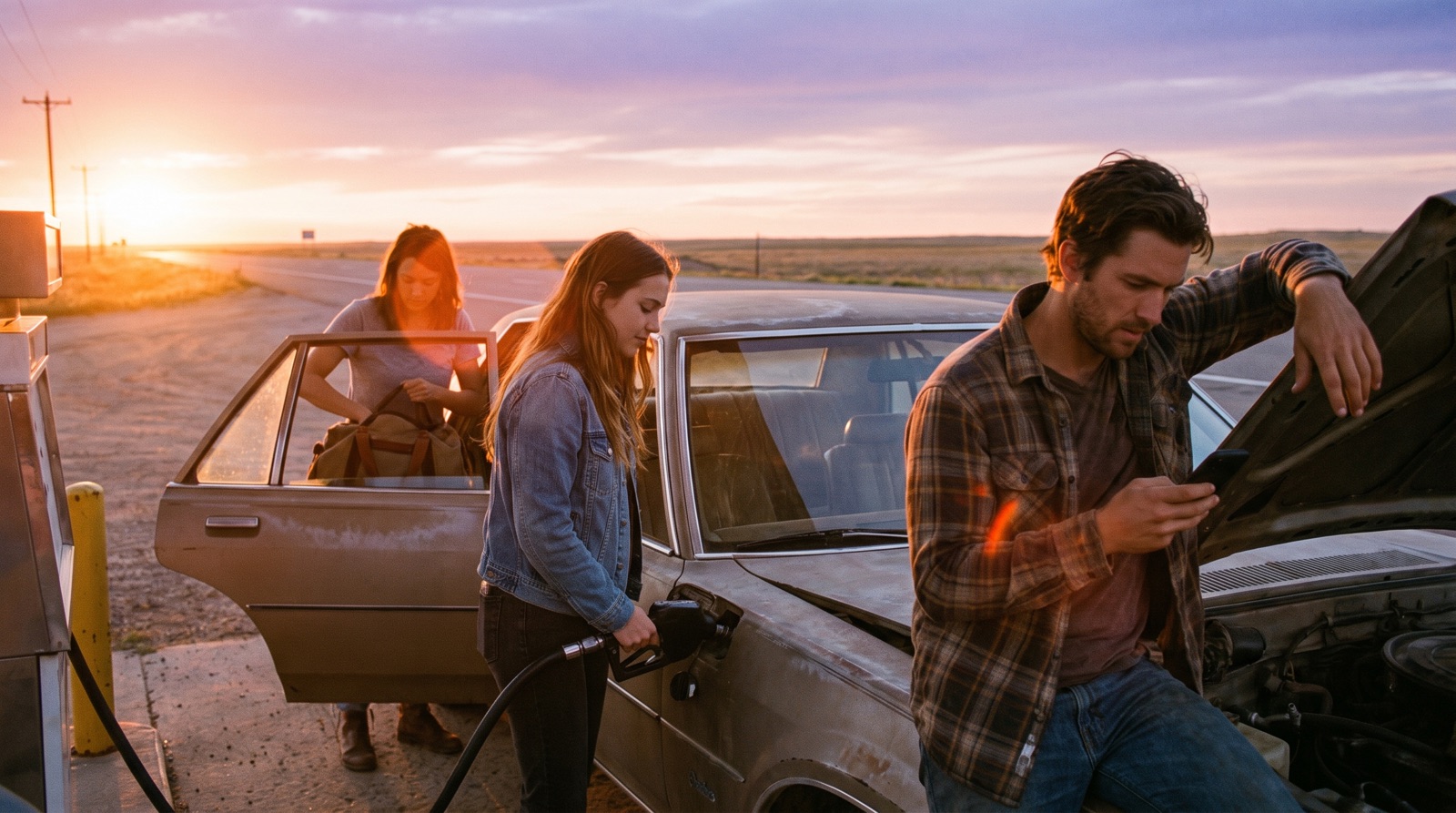
The fairest way to split road trip expenses is to pool every shared cost — gas, tolls, parking, food, and motels — into one running tab, decide before you leave whether the car owner gets anything beyond a free tank, and settle up once when you are home rather than at every pump. Call It Even is built for this: create a Group for the road trip, add everyone riding along, and every fill-up, toll, and snack run lands in the same shared ledger.
How do you split road trip expenses fairly?
You split a road trip fairly by logging each shared cost the moment it happens, splitting it among whoever is in the car for it, and settling the total at the end — because a road trip is not one big bill, it is forty small ones: a $58 fill-up in Barstow, a $9 toll outside Denver, a $31 snack raid, a $14 parking garage, each paid by whoever’s card was closest. Nobody gets cheated by a big number; they get nickeled by forty small ones nobody wrote down.
- Gas — the recurring cost, and the one that quietly causes the most friction.
- Tolls and parking — small, constant, and almost never recorded.
- Food stops and snacks — the least equal spend of the whole trip.
- Motels — one charge on one card, easy to split, easy to forget.
- The car itself — the cost nobody sees, and the one most likely to breed resentment.
How should you split gas on a road trip?
Split gas equally among everyone in the car, log each fill-up the moment the pump clicks off, and let one person’s card do the paying all trip. Gas causes trouble not because it is expensive but because it recurs — every three hours, forever. The tank runs dry, whoever is driving pulls in and pays, and after 900 miles the person who drove most has also bought the most gas. They will not say so at the time; they will say it in six months, when you ask to borrow the car.
- Everyone splits every fill-up equally. The default, and right for most trips — everyone in the car burned that tank.
- Rotate who pays at the pump. Feels fair, is not: prices swing by a dollar a gallon across state lines, so whoever draws the $80 fill-up subsidizes the $45 one.
- One person fronts the gas and is repaid at the end. The cleanest option, once a shared ledger does the remembering.
Pro Tip: Do not let the driver be the default payer. Whoever is at the wheel has already given the group four hours of their attention — reaching for their card at the same time is how “I feel like I paid for all the gas” gets started.
Should the car owner be paid for wear and mileage?
Yes on a long trip, usually not on a short one — but most friend groups settle this with a convention rather than a formula, and the popular one is that the owner drives while everyone else covers the gas. Gas is the cost you can see; tires, brake pads, and 2,000 miles of depreciation are the ones you cannot. The owner ends a long haul with a car worth measurably less.
| Approach | How it works | Best when |
|---|---|---|
| Nothing extra | The owner splits gas equally like everyone else; the car is what they brought. | Short hops, or a group that trades off whose car goes. |
| Owner rides free on gas | The passengers split every fill-up between them; the owner’s contribution is the car. | The most common compromise, and fair for most weekend trips. |
| Flat car contribution | The group agrees on a lump sum up front and the passengers split it. | Long hauls, or a car visibly taking a beating. |
| Per-mile reimbursement | Miles driven times an agreed rate. The IRS publishes a standard mileage rate each year covering fuel plus maintenance and depreciation — notably more than gas alone. | Very long trips, or a van brought specifically for the group. |
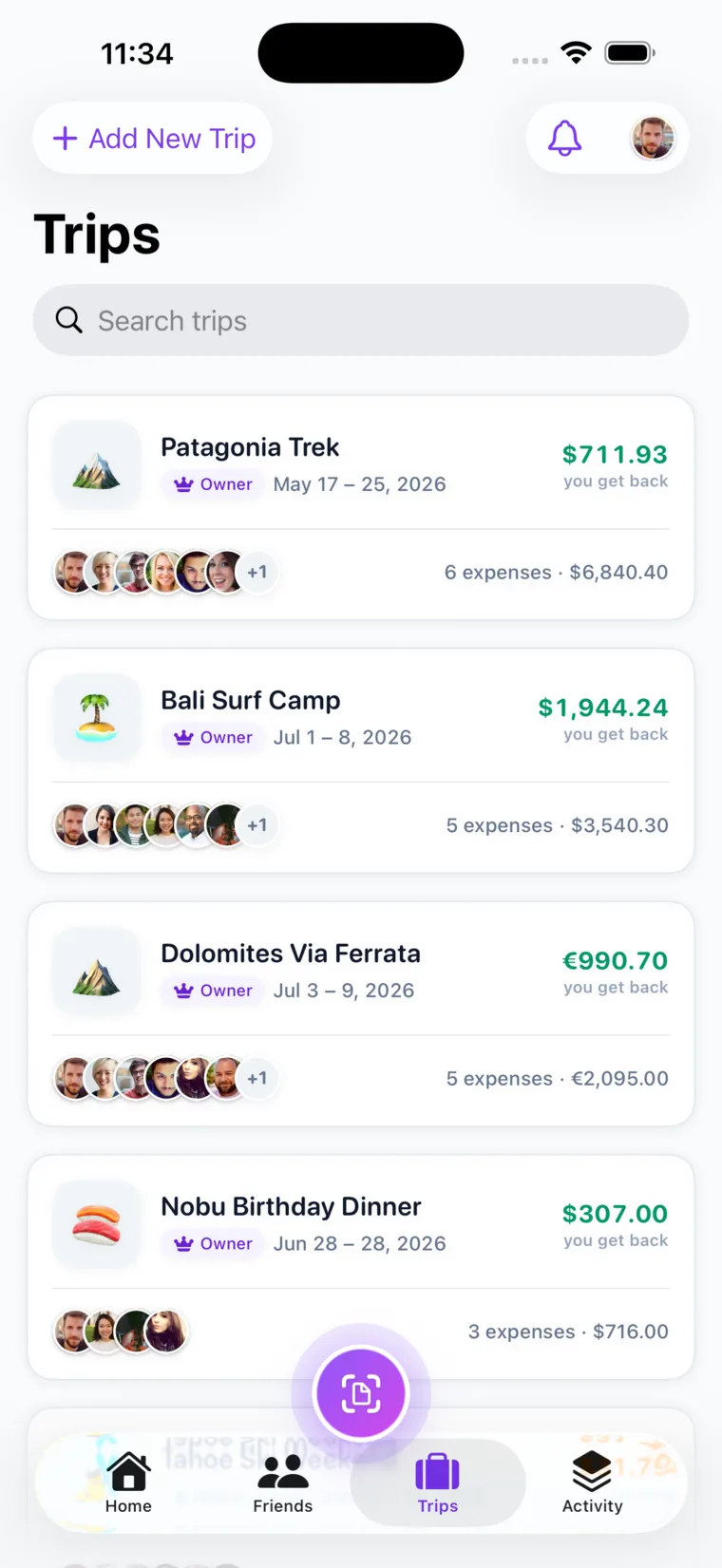
All of these are easy to record. If the owner rides free on gas, log each fill-up but leave the owner off the split — Call It Even divides among the people you tick. For a flat contribution, log one expense with the owner as the person who paid and only the passengers on the split, so the full amount sits in the ledger as money owed back to them. Whichever you pick, pick it out loud before anyone packs.
How do you handle tolls, parking, and the small stuff?
Split tolls and parking equally among everyone in the car and log them like any other expense — the trap is not that they are unfair, it is that they are too small to bother recording and too frequent to remember. Twelve dollars, nine times, is a hundred dollars nobody accounted for.
- Cash tolls and meters: log them at the next stop, while you still remember. Ten seconds each.
- Transponder tolls: these never touch a card — they hit the driver’s windshield and bill weeks later. Agree that the driver tallies them and adds one expense when the statement lands. A trip does not have to be “closed” to be corrected.
- Parking: split it among whoever the car was carrying. A hotel’s overnight parking belongs with the room, not the tank.
- Ferries, park passes, and tunnels: same rule. If the car went through it, the car’s passengers split it.
How do you split food stops and snacks?
Split the shared food evenly and let personal food stay personal — the gas station snack pile is shared, the sit-down dinner where one person got the steak and another got soup is not. If it goes in the middle of the car, it is shared: the chips, the water, the family-size gummy bears, split evenly, no discussion. A drive-thru where four people ordered four different meals at four different prices is a different animal. For those, photograph the receipt and let AI receipt scanning read it, then drag each item to whoever ordered it; tax and tip divide in proportion to what each person got. Verifying your email gives you two free scans a month, and your phone three more.
Split anything that gets passed around, itemize anything that gets ordered, and never spend longer discussing a bag of chips than it took to eat it.
Who should front the money on a road trip?
One person should front as much as possible — ideally all the gas, or all the motels — because a single card at the pump is faster and cleaner to log. Spreading payments around backfires: five payers over three days means five sets of receipts, five memories, and five chances to forget.
- Assign categories, not turns. One person owns gas, another motels, a third tolls. Everyone fronts something; nobody fronts everything.
- Log it before you pull away. Fifteen seconds at the pump beats fifteen minutes reconstructing it in a parking lot in Utah.
- Bring guests without an account. If someone’s partner is riding shotgun and is not on the app, add them as a guest — their share rolls up to whoever brought them.
- Let the non-app friends look. A share link gives anyone a read-only view of the Group, no account needed. It lasts three days and re-arms in a tap.
How do you split when someone joins for only part of the drive?
Work out each person’s dollar figure yourself, then enter those figures as an exact-amount split — Call It Even splits equally or by exact amounts, so the move is to do one line of division and type in the results. Say the trip burns $195 of gas over 900 miles. Four of you drive the whole route; Dana joins for the last 300 miles.
- Total person-miles: (4 × 900) + (1 × 300) = 3,900.
- Rate: $195 ÷ 3,900 = $0.05 per person-mile.
- Each full-trip rider: 900 × $0.05 = $45.
- Dana: 300 × $0.05 = $15.
- Check: (4 × $45) + $15 = $195. It reconciles to the cent.
Those five numbers are what you enter, and Call It Even confirms they add up to the total before it will save. Compare it to an even five-way split at $39 each: Dana would overpay $24 for miles she was never in the car for. The same method covers anything not shared equally — count the units, divide once, enter the amounts.
Why settle up at the end instead of at every gas station?
Because squaring up at every stop is a tax on the trip: it turns a nine-hour drive into nine transactions, nine phone unlocks, and nine reminders that money is a thing between you. Log as you go, pay once at the end, and the road trip gets to stay a road trip.
Call It Even keeps a running balance with each person as the trip goes on, so anyone can see where they stand without a reckoning at the pump. It is a ledger, not a bank: it never holds, moves, or requests your money. Once you are home, “settle up” simply records the payment you made outside the app — cash, a bank transfer, whatever you already use. If the drive crosses a border, each currency stays on its own balance and is never converted or added to another.
Call It Even makes splitting a road trip simple
Call It Even makes splitting a road trip simple because it is built for this exact shape of mess: dozens of small costs, four cards, one car, and nobody who wants to be the accountant. Create a Group, add everyone riding along, and log each fill-up and toll in seconds, as it happens.
Gas splits evenly in a tap. The leg Dana joined for goes in as exact amounts. The dinner comes off a receipt photo. The friend who has not downloaded it yet rides along as a guest, or watches through a share link. It is free forever on iPhone, Android, and the web. Get Call It Even and let your next road trip be about the road.
Key takeaways
| Point | Details |
|---|---|
| Gas is the flashpoint | Not the amount but the frequency. Split each fill-up evenly, and do not let the driver be the default payer. |
| Settle the car question early | Nothing extra, owner rides free on gas, a flat contribution, or a per-mile rate — any is fine, but agree it before you leave. |
| Log the small stuff on the spot | Tolls and parking are too small to bother with and too frequent to remember. Ten seconds each beats a hundred unaccounted dollars. |
| Use exact amounts for partial rides | Work out each person’s figure from their person-miles, then enter the amounts — Call It Even checks they sum to the total. |
| Settle once, at the end | The ledger keeps a running balance with each friend; you pay however you already do and record it. |
FAQ
How do you split gas on a road trip?
Split each fill-up equally among everyone in the car and log it the moment the pump clicks off, ideally with one person fronting all the gas for the trip. Rotating who pays at the pump feels fair but is not, because tanks and state gas prices are never equal.
Should you pay the car owner for using their car?
On a long trip, yes — the owner absorbs tires, maintenance, and depreciation nobody else sees. Most friend groups use a convention rather than a formula, and the most common is that the owner rides free on gas while the passengers split every fill-up between them.
How do you split gas when someone joins for only part of the trip?
Add up the total person-miles, divide the gas cost by that number to get a per-person-per-mile rate, and multiply it by each person’s miles. Enter the resulting figures as an exact-amount split in Call It Even, which confirms they add up to the total before saving.
Should you pay each other back at every gas station?
No — settling at every stop turns a drive into a string of transactions. Log each expense as it happens, let the running balance with each friend build over the trip, and make one payment when you are home, however you already pay each other.
Is Call It Even free for splitting a road trip?
Yes. Call It Even is free forever with no fees and no bank details, on iPhone, Android, and the web. It is a ledger that tracks who owes whom across the trip and never moves your money — you settle up however you already pay and record it.
Recommended
- Group Trip Expenses – Call It Even
- How to Split Travel Expenses in Multiple Currencies – Call It Even
- How to Settle Debts in a Friend Group Fairly – Call It Even
- Groups (Trips & Households) – Call It Even
- How to Split a Concert or Festival Trip – Call It Even