

When a roommate won’t pay their share, work out which of three problems you actually have — they forgot, they can’t, or they won’t — because the fix for each is completely different and using the wrong one makes it worse. Most cases are the first, and a visible running balance solves them without a conversation. The rarer ones need a conversation, and eventually a boundary.
Which of the three problems do you have?
Start here, because “my roommate won’t pay” describes three unrelated situations that people treat identically and shouldn’t.
| Problem | What it looks like | What fixes it |
|---|---|---|
| They forgot | Pays immediately when reminded, apologetic, happens repeatedly | A system, not a conversation — make the balance visible. |
| They can’t | Avoids the topic, pays late in fragments, is visibly stressed | A plan and a timeline. Pressure won’t create money. |
| They won’t | Disputes amounts, promises and doesn’t, goes quiet | A boundary, in writing, with consequences. |
Getting this wrong is expensive in both directions: treating a forgetter like a freeloader poisons a fine living situation, and treating a genuine freeloader like a forgetter costs you months of rent.
How do you fix the forgetting case?
Remove the need for anyone to ask. Almost all “chasing” in shared houses exists because the debt lives in one person’s head and only becomes real when they say it out loud — which is unpleasant, so they delay, and by the time they raise it there are three months of it.
- Log every shared cost the day it happens so the balance is a fact rather than a claim.
- Put the repeating bills on a schedule. Rent, utilities and subscriptions post themselves and notify everyone, so nobody is the announcer.
- Settle on a rhythm — a fixed day each month — so paying is a routine rather than a response to being asked.
- Let them see it themselves. Everyone reads the same ledger; a share link works for anyone without an account.
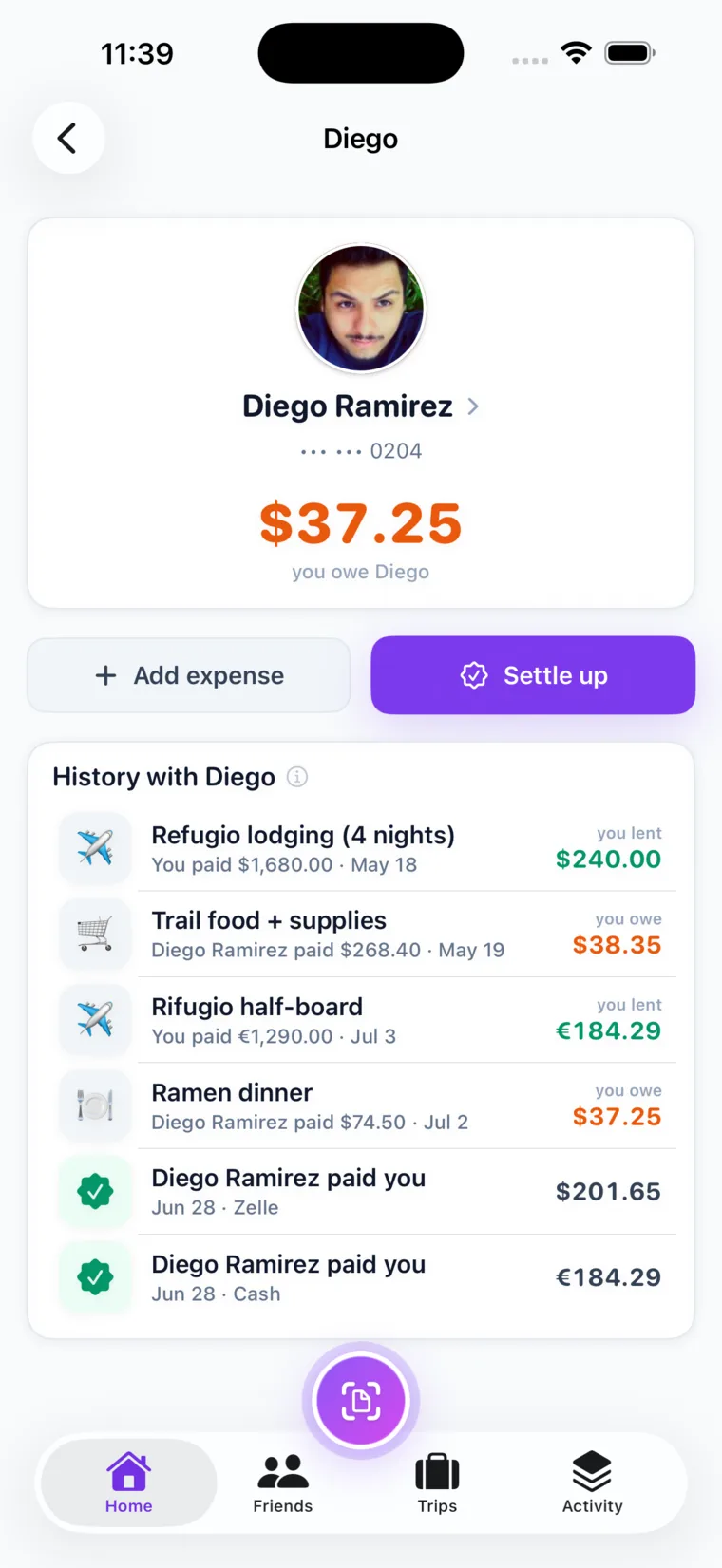
Pro Tip: Set a settle day and name it — “we square up on the 1st”. A date is much easier to honour, and much easier to reference, than an open-ended expectation that someone should pay you back at some point.
What if they genuinely can’t pay right now?
Separate the record from the pressure. Keep the balance accurate — do not quietly delete it to be kind — but move the conversation from “how much” to “when”, which is the only variable they can actually act on.
- Ask for a date, not a payment. “When works?” is answerable; “can you pay me?” often isn’t.
- Accept instalments. Three payments that arrive beat one that doesn’t.
- Protect the essentials first. If money is short, rent and utilities get paid before the shared streaming plan.
- Decide if you’re forgiving it, and say so. Half-forgiving — writing it off privately while still resenting it — is the worst outcome for both of you.
Be honest with yourself about capacity too. Covering a housemate’s share is a real loan; if you can’t afford to and never say so, the resentment compounds faster than the debt.
What if they simply won’t pay?
Put it in writing, be specific, and attach a consequence you are actually willing to carry out. Vague, repeated, escalating verbal reminders are the least effective thing you can do — they teach the other person that nothing happens.
- Send the record, not a summary. Dated line items with receipts are checkable; “you owe me about $600” starts an argument about the number.
- Be exact. “$612.40, covering July and August utilities — can you pay by the 15th?” leaves nothing to interpret.
- Use writing, not the doorway. A message creates a record and gives them room to respond without a confrontation.
- Name the consequence honestly. Removing them from the shared plan, stopping the shared grocery run, or not renewing the lease together — whatever you will genuinely do.
- Know your position on the lease. On a joint tenancy the landlord will pursue whoever they can; that is a legal matter and worth getting proper advice on rather than guessing.
How do you stop it happening with the next roommate?
Agree the money rules before anyone moves in, when it costs nothing to discuss.
- Who holds which account — split the bill-holding so no one person fronts everything.
- What is shared and what isn’t — staples versus personal groceries, mainly.
- A settle day, named and fixed.
- Everyone in the same ledger, so the numbers are never one person’s word.
- What happens when someone is short — deciding this while everyone is solvent is much easier than during.
Key takeaways
| Case | Do this |
|---|---|
| They forgot | Fix the system: log costs daily, automate recurring bills, set a settle day. |
| They can’t | Keep the record, drop the pressure, agree a date and accept instalments. |
| They won’t | Written, specific, dated, with a consequence you’ll actually follow through. |
| Any case | Never delete the debt silently — decide and say what you’re doing. |
| Next time | Agree the rules before move-in, while it’s free to talk about. |
FAQ
How do you get a roommate to pay their share?
First work out whether they forgot, can’t, or won’t. Forgetting is fixed by a system — log every shared cost so the balance is visible, automate the recurring bills, and set a fixed settle day — which removes the need to ask at all. Only the other two cases need a conversation.
How do you ask a roommate for money without starting a fight?
Send the record rather than a summary, be exact about the amount and the date, and do it in writing. Dated line items with receipts can be checked; a rounded verbal figure invites an argument about the number instead of the payment.
Should you forgive a roommate’s debt?
Only deliberately, and out loud. Quietly writing it off while continuing to resent it is the worst outcome for both people. If you are forgiving it, say so clearly and stop counting it; if you are not, keep the balance accurate and agree a timeline.
What if a roommate won’t pay rent specifically?
Treat it as urgent rather than as another shared cost, because on a joint tenancy the landlord can pursue the other tenants. Put the request in writing with a specific amount and date, and get proper advice about your position on the lease rather than guessing.
How do you prevent this with a new roommate?
Agree the rules before move-in: who holds which account, what counts as shared, a named settle day, and everyone using the same ledger so the numbers are never one person’s word against another’s.
Recommended
- How to Get Friends to Pay You Back – Call It Even
- How to Split Rent with Roommates – Call It Even
- When One Person Pays for Everything – Call It Even
- When Friends Disagree About Who Owes What – Call It Even
- When Someone Leaves the Group Still Owing Money – Call It Even