

When someone moves out, drops out of a trip, or quietly leaves the group still owing money, deal with the number while the relationship is still warm — the amount rarely changes, but your willingness to raise it drops every week. Most of these debts are never refused; they are simply never mentioned, and then they become permanent. Call It Even keeps the balance intact after someone leaves a group, so the record survives even when the group doesn’t.
Why do leaving debts go unpaid so often?
Because the moment of leaving removes every natural reminder at once. While someone lives with you or is going on the trip, the debt comes up on its own. The day they go, raising it takes a deliberate act — and deliberate acts about money between friends are exactly what people avoid.
- The reminders disappear. No more shared kitchen, no more group chat about the booking.
- The context changes. Asking now feels like a demand rather than a mention.
- Memory diverges. Two people remember two different numbers, and both are sincere.
- Nobody wants to be the one who cared about money at a goodbye.
When should you raise it?
Before they leave, ideally during the same conversation where the leaving is being organised — the move-out date, the last day of the trip, the handover of keys. Money raised as part of logistics is a logistical matter; money raised a month later is a confrontation.
| When you raise it | How it lands | Likely outcome |
|---|---|---|
| While the leaving is being planned | Part of the admin | Paid, usually without discussion |
| In the last week | A reasonable reminder | Usually paid |
| A month after | An awkward message | Often part-paid, often delayed |
| Six months after | A grievance | Rarely paid, sometimes costs the friendship |
What do you actually say?
Give the number, give the context in one line, and make it easy to act on. Long messages read as anxious, and anxiety invites negotiation where none was needed.
“Before you go — you’re at $215 from the utilities and the couch. No rush, whenever works.” That is the whole message. It states the amount, says where it came from, and removes the pressure in six words.
- Lead with the number, not the history.
- Say what it’s from in one clause, so it can be checked rather than debated.
- Offer time, because it costs you nothing and makes agreement easy.
- Send it once. A second identical message a week later is a reminder; a third is a campaign.
Pro Tip: Point at a shared record rather than at a figure you calculated. “The app says $215” is a fact you can both look at; “I worked out you owe me $215” is an assertion that invites a counter-assertion.
What if they dispute the amount?
Go to the itemised history rather than defending the total, because the disagreement is almost always about one specific expense and not about the sum. When both people can see the same list of dated items, the argument resolves itself in about a minute.
- Look at the items together, not the balance.
- Expect one genuine error — long-running balances usually contain a mistake, and finding it builds trust rather than losing face.
- Concede the small ones. Arguing over $12 to protect a $200 balance is bad strategy.
- Ask what number they think it is. The gap is usually smaller than the argument.
What about a roommate who moves out mid-lease?
Settle the shared costs separately from anything to do with the lease, and do the lease properly in writing with the landlord. These two things get tangled constantly, and only one of them is a friendship matter.
- Pro-rate the final bills by days and enter them as exact amounts so the figures match the real dates.
- The deposit is not yours to hold. Work out their portion, agree it, and pay it when it’s returned — it is a loan being unwound, not a bargaining chip.
- Final utility bills arrive weeks later. Agree the split before they go, or one person inherits them.
- Shared furniture needs a decision: bought out, taken, or left. Decide it before the van arrives.
When should you just write it off?
When the amount is smaller than the relationship and you have already asked once, clearly. There is a real number below which chasing costs more than the money is worth, and most people set it far too low out of principle.
- Decide the figure for yourself and apply it consistently rather than case by case.
- If you write it off, write it off. Clear the balance and stop counting it — a debt you have privately forgiven but still remember is the worst of both.
- Adjust the future instead. Someone who doesn’t repay once is telling you how to plan the next trip.
- Keep the record honest either way. Settling a balance to zero is a decision; forgetting it isn’t.
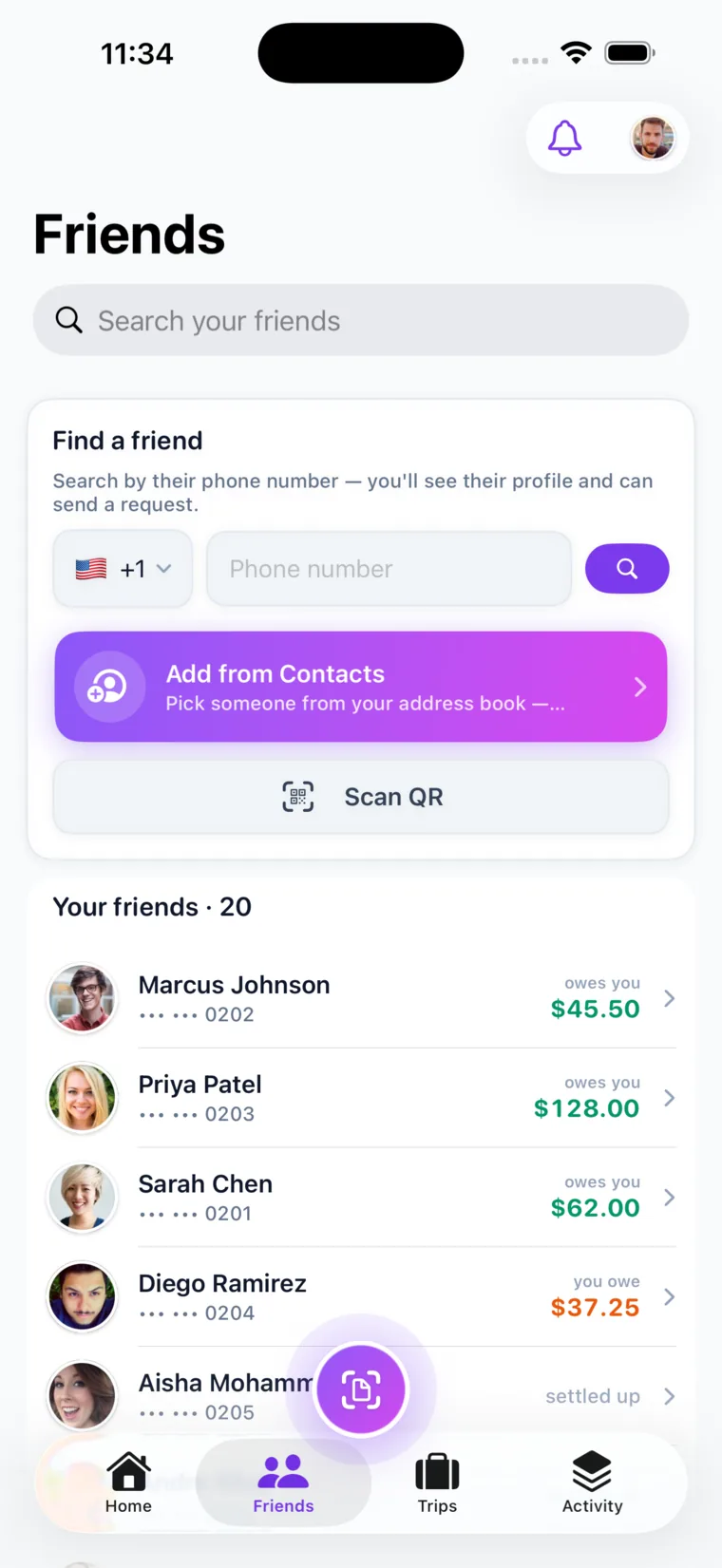
Call It Even keeps the history and the balance after someone leaves a group, so the number is a shared fact rather than two people’s memories. Get Call It Even free on iPhone, Android and the web.
Key takeaways
| Question | Answer |
|---|---|
| Best time to raise it | While the leaving is being organised, as part of the admin. |
| What to say | The number, one line of context, no rush. Once. |
| If disputed | Go to the itemised list, not the total. Concede the small ones. |
| Moving out | Pro-rate by days; keep the deposit separate from the bills. |
| Writing it off | Fine — but clear the balance and genuinely stop counting. |
FAQ
How do you ask someone who has moved out for money they owe?
Send one short message with the amount, a single line about what it’s from, and an explicit “no rush”. Point at a shared record rather than a figure you calculated, so it reads as a fact to check rather than a claim to dispute.
What if a roommate leaves without paying their share?
Raise it while the move is still being organised, when money is part of the logistics rather than a confrontation. Pro-rate the final bills by days, handle the deposit as a separate matter to be unwound when the landlord returns it, and agree the furniture before the van arrives.
What do you do if they say they don’t owe that much?
Open the itemised history together instead of defending the total — the disagreement is nearly always about one specific expense. Expect to find one genuine error in any long-running balance, and concede the small items rather than risk the large ones.
When should you give up on money someone owes you?
When the amount is worth less to you than the relationship and you have already asked clearly, once. Decide that threshold in advance and apply it consistently, then actually clear the balance rather than privately keeping score.
Does the balance survive if someone leaves a shared group?
Yes — the history and the running balance between you remain after the group itself is finished, so the number stays a shared fact instead of becoming two different recollections.
Recommended
- What to Do When a Roommate Won’t Pay – Call It Even
- How to Get Friends to Pay You Back – Call It Even
- How to Settle Debts in a Friend Group Fairly – Call It Even
- Add Friends – Call It Even