

Talking about money with friends goes badly for one reason above all others: it usually happens too late, about a specific number, when one person is already annoyed. Move the conversation earlier — before the trip, before the bill, before anyone is owed anything — and it stops being a confrontation and becomes logistics. Almost everything else is detail.
Why is money awkward between friends in the first place?
Because friendship runs on the assumption that nobody is counting, and money requires someone to count. Raising it can feel like an admission that the friendship is transactional — which is why people avoid it right up until they are annoyed enough to bring it up badly.
- Asking feels like an accusation. Even a neutral request lands as “you forgot” or “you’re stingy”.
- Money is a proxy for status. Saying “that’s too expensive for me” feels like disclosing something private.
- Nobody wants to be the bookkeeper. The person tracking looks petty, even though they’re doing everyone a favour.
- Silence compounds. One unmentioned $40 is nothing; six months of unmentioned $40s is a grievance.
What’s the single biggest fix?
Say the number before the event, not after it. Nearly all money friction between friends comes from a mismatch that was knowable in advance and only surfaced once the money was spent.
- Before a trip: “roughly $400 each all in, does that work?” — sent before anyone books.
- Before a dinner: “shall we put drinks separately?” — asked when you sit down, not when the bill lands.
- Before a group gift: “thinking $25 a head, no pressure to be in.”
- Before a shared subscription: “it’s $4.60 each a month, I’ll add it to the ledger.”
Sent first, a number is an invitation. Sent afterwards, the identical number is a bill. That’s the whole difference, and it costs nothing.
How do you bring up money someone already owes you?
Lead with the record and assume it’s a mistake — because it almost always is. The goal of the first message is not to get paid; it’s to make the debt visible without making it a character judgement.
| Instead of | Try |
|---|---|
| “You still owe me for the weekend.” | “Put the cabin in the app — you’re at $180, whenever’s good.” |
| “You never paid me back.” | “Have I got this right? I’ve got you down for $84.” |
| “Can you pay me?” | “When suits you to square up?” |
| “That’s not what we agreed.” | “Can we check this together — I might have missed something.” |
The right-hand column works because it does two things at once: it names the amount precisely, and it gives the other person a way to respond that isn’t an apology.
Pro Tip: Ask about timing rather than money. “When works?” is a question someone can answer honestly even when the answer is “not this month” — and it’s far less likely to be ignored than “can you pay me?”
How do you say something is too expensive?
Decline the specific thing, not the friendship, and don’t explain more than you want to. “I’ll skip the tasting menu but I’m in for drinks after” is a complete sentence and requires no financial disclosure.
- Be early. Opting out before a booking costs nothing; after a deposit it costs money and goodwill.
- Offer the alternative you do want. It signals you want to be there, which is what people actually care about.
- Don’t over-explain. A reason invites negotiation. “That’s a bit much for me this month” is enough.
- Don’t apologise for it. Apologising frames it as a failing rather than a choice.
And on the other side: if you’re the one planning, make opting out easy and unremarkable. Price the optional extras separately so nobody has to say no to the whole thing to say no to one part of it.
How do you take the bookkeeping out of it entirely?
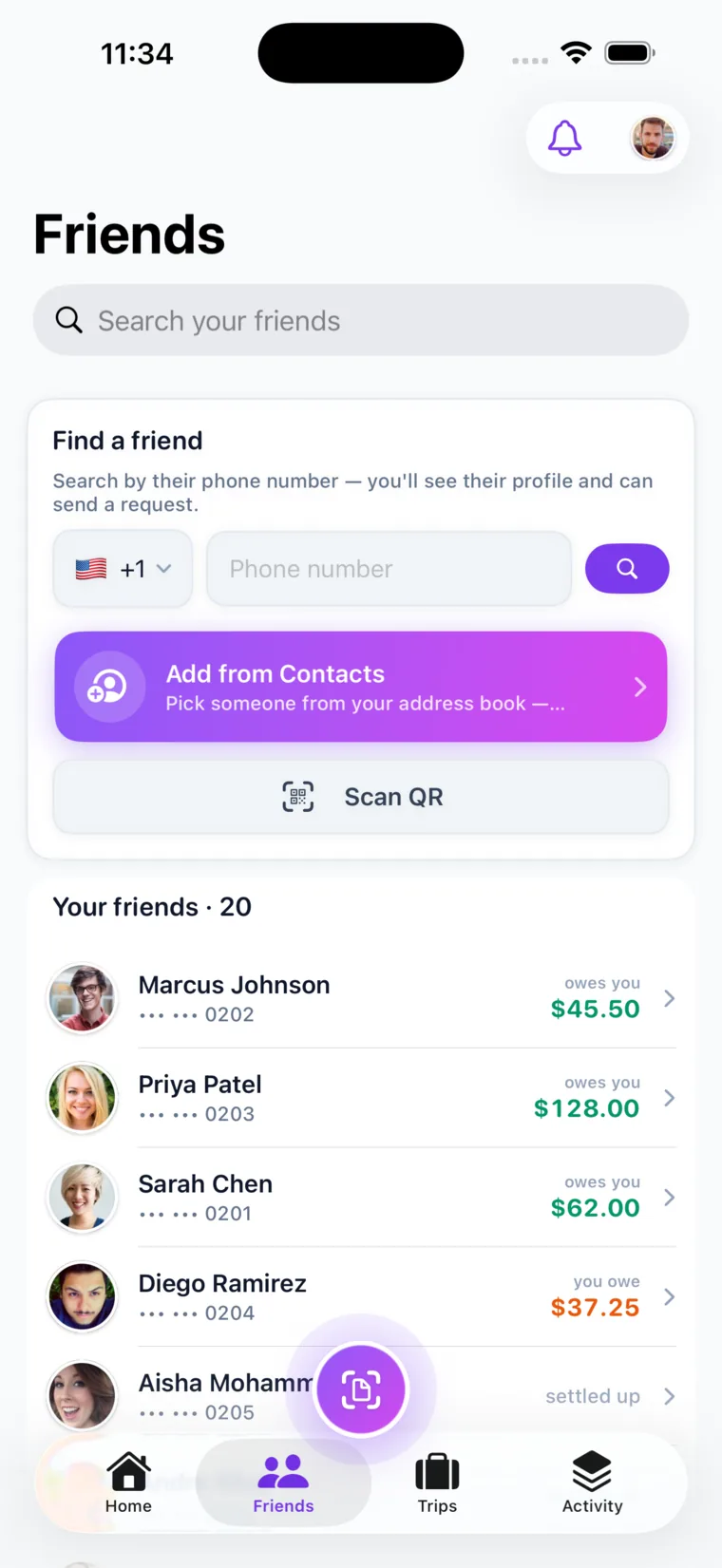
Put the numbers somewhere everyone can see, so no person has to be the one who remembers. This is the structural fix, and it’s why a shared ledger changes the dynamic more than any script does — the balance stops being one person’s claim and becomes a shared fact.
- Log costs as they happen, so nobody learns what they owe weeks later.
- Everyone sees the same thing — and anyone without an account can be sent a read-only link.
- Automate the repeating bills so recurring costs never need a monthly reminder.
- Settle on a rhythm, so paying is a routine rather than a response to being asked.
- Remember it never moves money. Call It Even is a ledger, not a bank — you pay each other however you already do, and record it.
Key takeaways
| Situation | What to do |
|---|---|
| Planning anything shared | Say the per-person number before anyone commits. |
| Someone owes you | Lead with the record, assume a mistake, ask about timing not money. |
| It’s too expensive for you | Decline the specific thing, offer an alternative, don’t over-explain. |
| You’re the organiser | Price optional extras separately so opting out is easy. |
| Ongoing | Shared ledger, automated recurring bills, a fixed settle day. |
FAQ
How do you bring up money with friends without it being awkward?
Raise it before the spending rather than after. A per-person number sent before anyone books reads as an invitation; the identical number sent afterwards reads as a bill. Most awkwardness is timing, not the money itself.
How do you remind a friend they owe you money?
Lead with the record and assume a mistake: name the exact amount, point at where they can see it, and ask when suits them rather than whether they can pay. Asking about timing gives an honest answer even when the answer is “not this month”.
How do you tell friends something is too expensive?
Decline the specific thing and offer the part you do want — “I’ll skip the tasting menu but I’m in for drinks after”. Say it early, before deposits, and don’t over-explain; a detailed reason invites negotiation you didn’t ask for.
How do you avoid being the group’s bookkeeper?
Put the numbers where everyone can see them instead of in your head. When the balance is a shared record rather than one person’s claim, nobody has to remember, announce, or chase — and anyone without an account can be sent a read-only link.
Doesn’t tracking money make a friendship transactional?
The tracking isn’t what makes it transactional — the unspoken tally does. Writing costs down removes the need for anyone to keep score privately, which is the thing that actually erodes goodwill over time.
Recommended
- The Psychology of Who Owes Who – Call It Even
- How to Get Friends to Pay You Back – Call It Even
- When Friends Disagree About Who Owes What – Call It Even
- How Couples Split Expenses Fairly – Call It Even
- How to Split a Secret Santa or Gift Exchange – Call It Even
- How to Split Costs When Money Is Tight – Call It Even