

Splitting pet costs works when you decide two things in advance: who the animal actually belongs to, and what happens when a bill is unexpectedly enormous. Everything else — food, insurance, grooming, litter — is a small recurring cost that a shared ledger can post automatically. The emergency vet bill is the one that ends friendships, and it is the one nobody discusses until they are standing at a counter at 2am. Call It Even handles the routine part on a schedule so you can spend your attention on the part that matters.
Who should pay for a pet in a shared house?
Whoever owns it — and “owns” means whoever keeps the animal when the household ends, not whoever feeds it most. Ambiguity here is the root of almost every pet-cost disagreement, because a dog everyone loves quietly becomes a dog everyone is assumed to be funding.
| Arrangement | Who pays |
|---|---|
| One person’s pet, others just live with it | The owner pays everything. Housemates are not co-owners because they enjoy the cat. |
| One person’s pet, but the house benefits | Owner pays the pet’s costs; the house may share pet rent or a pet deposit, since those are charges on the tenancy. |
| Genuinely co-owned | Split everything, and agree the custody and cost rules before the animal arrives. |
| A partner’s pet who moved in with them | Usually stays theirs, though many couples move to sharing once it is clearly a shared household. |
Whatever the answer, say it out loud once. Housemates rarely object to paying a share; they object to discovering they are expected to.
Which pet costs are predictable enough to automate?
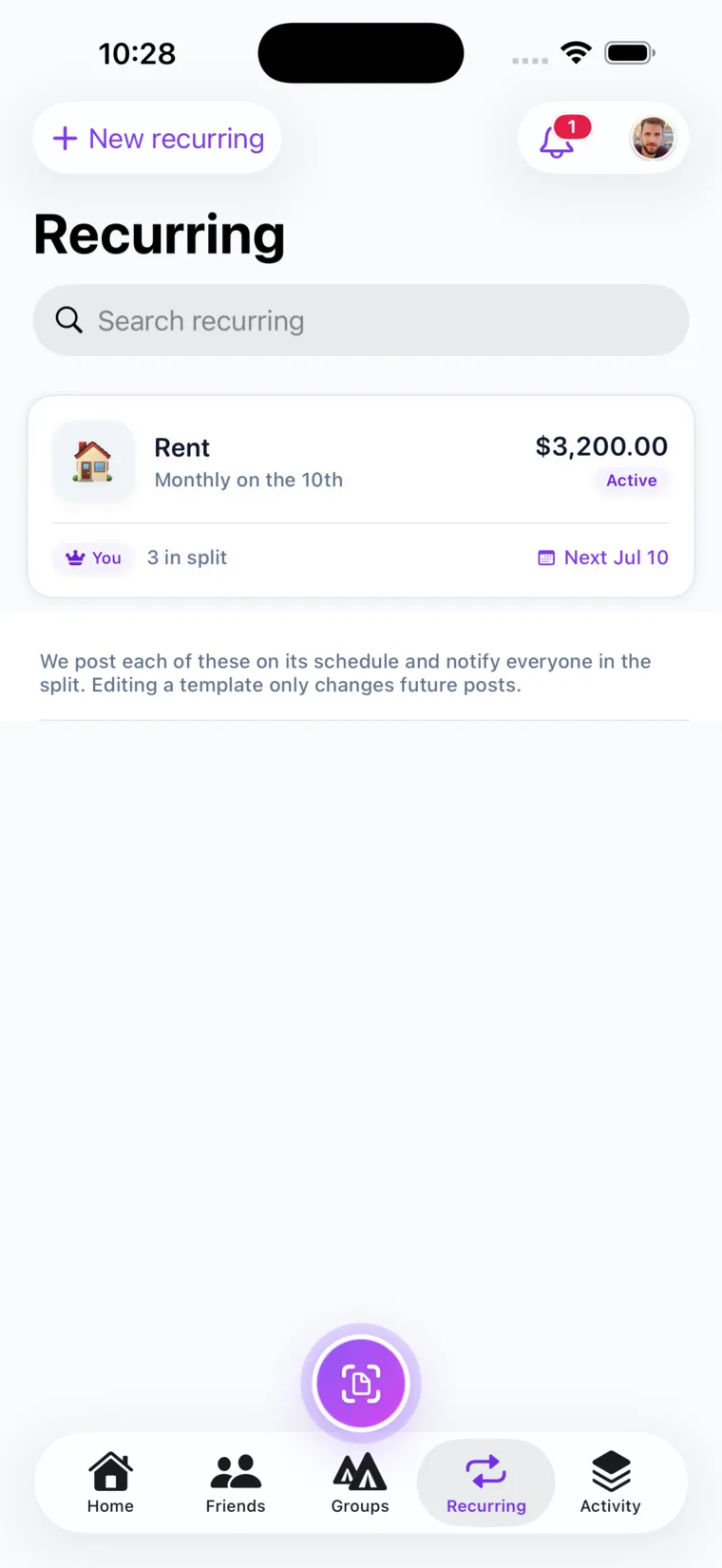
Most of them. Food, insurance, preventative medication, grooming, and litter recur on a schedule and barely change month to month, which makes them ideal for a recurring split that posts itself and notifies everyone.
- Food. Monthly and stable. Set it once at the real amount rather than re-entering it twelve times.
- Insurance. Monthly, and by far the highest-leverage cost here — see below.
- Flea, tick and worm treatment. Monthly or quarterly; set the schedule to match.
- Grooming. Every six to eight weeks for some breeds and genuinely expensive.
- Pet rent. If the landlord charges it, it is a housing cost, not a pet cost — split it like rent.
Pro Tip: Set the recurring charge to the amount you actually pay, not a round number. “About $60 for food” becomes a small monthly argument; $58.40 posted automatically on the 3rd never does.
How do you handle an emergency vet bill?
Agree the rule before you need it: who decides, up to what number, and who pays. An emergency vet visit routinely runs into four figures, arrives with no warning, and demands a decision from whoever happens to be holding the leash — which is the worst possible moment to discover you had different assumptions.
- Set a threshold. “Anything under $300, just do it and log it. Anything above, we talk first if there is time.” Most disputes are about not being consulted, not about the money.
- Whoever is there decides. Give that person real authority in advance. Nobody should be phoning a housemate while an animal is in distress.
- Log it that day. A $1,400 bill entered a fortnight later, from memory, with no receipt, is a fight. Photograph the invoice and attach it.
- Split it the way ownership says. Co-owned means shared, even when it is inconvenient. That is what co-owned means.
- Do not let it sit. A four-figure balance between friends should be settled on a plan, not left open indefinitely — even a few agreed instalments beats silence.
Is pet insurance worth it when the costs are shared?
It is worth considering precisely because it converts the unpredictable cost into a predictable one — and unpredictable costs are what shared arrangements handle worst. A $45 monthly premium splits cleanly and automatically forever; a surprise $2,600 surgery does not.
- It makes the budget splittable. Two people can comfortably agree to $22.50 each per month. Agreeing to an unbounded liability is much harder.
- It removes the worst conversation. The one where treatment depends on whether the other person can pay their half this week.
- The excess still needs a rule. Insurance has deductibles and exclusions; decide how those are split too.
Whether it is worth the money for your animal is between you and the policy — but as a mechanism for keeping shared pet costs civil, converting a spike into a subscription is hard to beat.
What happens when you break up or move out?
The pet goes with its owner and the recurring costs stop being shared from that date — which is straightforward when ownership was agreed at the start and genuinely painful when it was not. Pets are the one shared “asset” that cannot be sold and split.
- Stop the recurring split from the move-out date. Ending a schedule leaves the months already posted intact — you are stopping future charges, not erasing history.
- Settle the outstanding balance. Especially a big vet bill still being paid down. Leaving a household does not close a ledger.
- Decide about ongoing contributions honestly. Some people keep contributing to an animal they co-raised; many do not. Either is fine as long as it is explicit and time-bounded.
- Keep paying anything you agreed to. A promise made kindly at a breakup is still a promise, and it is the one most likely to quietly lapse.
Pro Tip: Write down who the pet belongs to on the day you get it, even if it feels absurdly formal between people who live together. The conversation costs nothing now and is unbearable later.
What about damage and pet deposits?
Treat the deposit as a loan and the damage as the owner’s, unless you all agreed otherwise. Landlords increasingly charge a non-refundable pet fee, a refundable pet deposit, or monthly pet rent, and each behaves differently.
- Non-refundable pet fee: a cost. Usually the owner’s, unless the house agreed to share it.
- Refundable pet deposit: a loan, like any deposit. Log who paid it and unwind it when returned.
- Monthly pet rent: recurring. Split it the same way you decided on the pet itself.
- Actual damage: the owner’s, and usually taken out of the deposit at move-out — which is exactly why the deposit needs to be tracked per person rather than as a household lump.
Key takeaways
| Question | Answer |
|---|---|
| Who pays? | Whoever keeps the animal if the household ends. Say it out loud on day one. |
| Routine costs | Food, insurance, meds, grooming — set them recurring so they post and notify automatically. |
| Emergency vet bills | Agree a decision threshold in advance, log the bill that day with the invoice attached. |
| Insurance | Turns an unpredictable spike into a splittable monthly amount — the shared-cost problem’s best friend. |
| Breaking up or moving out | Stop the recurring split from that date, settle what is outstanding, be explicit about anything ongoing. |
| Pet deposit vs pet fee | A deposit is a loan to track; a fee is a cost. Damage is the owner’s. |
FAQ
Should roommates split the cost of a pet?
Only if they genuinely co-own it — meaning they would share custody if the household ended. Living with someone’s cat does not make you a co-owner. Housing charges like pet rent or a pet deposit are a different matter, since those are charges on the tenancy rather than on the animal.
How do you split an emergency vet bill?
Agree in advance who can authorise treatment and up to what amount, then log the bill the same day with the invoice attached and split it according to ownership. Most fallouts are about not being consulted rather than about the sum itself, and a four-figure balance should be settled on an agreed plan rather than left open.
How do you track recurring pet costs like food and insurance?
Set each one up as a recurring expense on the day it is actually charged, split the way you agreed, so it posts itself and notifies everyone without anybody re-entering it each month. Edits apply to future charges and leave past months untouched.
Who keeps the pet when you break up or move out?
Whoever was agreed as the owner — which is why it should be agreed on day one, in writing, however formal that feels. Stop the recurring split from the move-out date, settle any outstanding balance such as a vet bill still being paid down, and be explicit and time-bounded about any continuing contribution.
Is Call It Even free for splitting pet costs?
Yes — free forever on iPhone, Android, and the web, with no fees and no bank details. It tracks the running balance between you and never holds or moves money; you settle however you already pay each other and record it.
Recommended
- How to Split Recurring Bills and Subscriptions – Call It Even
- How Couples Split Expenses Fairly – Call It Even
- How to Split Rent with Roommates – Call It Even
- Recurring Expenses – Call It Even